
Editor's Note: Not every commentary on the SBC is within the context of SBC messenger dialogue. Below is a letter from Pastor Heath Woolman to his church, Fruit Cove Baptist Church. It's important to remember thta the debate has significance not only on the floor of the convention, but also to church members.
-----
6/2/26 UPDATE: In a recent video released this afternoon, Dr. Mohler announced a modification of his initial proposed language to limit the “function” of pastor/elder/overseer to “specifically preaching to an assembled congregation.” While I believe this to be a helpful clarification, the SBC must still define this office clearly and comprehensively.
Let me begin by affirming the generations of faithful work of Southern Baptists. My entire life has been influenced, discipled, trained, equipped, and shaped by the work of local Southern Baptist churches, conventions, associations, and our entities. I must also say that I owe Dr. Al Mohler a debt of gratitude for his decades-long leadership, as I serve as an equipped pastor, in part, because of my time as an M.Div. student at Southern Seminary.
As a committed conservative complementarian and the Lead Pastor of one of the forerunners among CP-giving churches in our convention, I feel compelled to share my concern about the Truth and Unity Amendment as announced by Dr. Mohler. If the events unfold as he projects, our convention will be presented with two motions to consider in Orlando. Both of which cause me to have great concern.
Constitutional Amendment
The language of the amendment is concise and aligns clearly with the language used in Article III, Section 1, (https://www.sbc.net/about/what-we-do/legal-documentation/constitution/) namely subsections 1 (on homosexuality), 4 (on sexual abuse), and 5 (on discrimination). However, simply using the same language does not always ensure the same outcome. Each of the above-mentioned limiting factors for friendly cooperation with the Convention has been clearly and repeatedly defined. Almost anyone within the SBC can rightfully define these issues and can clearly identify when a line has been crossed.
As I see it, the issue with the Truth and Unity Amendment is that we are considering the adoption of a clause that bears no universally known or accepted definition. This is a topic that regularly begs the question, “What is the office and function of a pastor/elder/overseer?”
Admittedly, we have attempted to debate and clarify this position in recent years, yet no definition that I know of has ever been affirmed or accepted by the messengers of the SBC. Simply attempting to define what we are talking about by saying, “such as preaching to the assembled congregation,” is not enough. The ambiguity could, and most certainly will, cause a new wave of debate and weaponization within our ranks. I agree with Dr. Mohler that we must be clear about this so we can move past the continuation of yearly motions and floor actions. Nevertheless, we must have a clearer picture and a broader understanding of what we are attempting to define and accomplish.
Without offering an endorsement for any presidential candidate, I agree with Dr. Willy Rice that a task force should be “initiated from the convention floor in Orlando, that would be chosen by the next SBC President and would address this issue. The task force would be composed of convictional leaders who will listen to the grassroots concerns of Southern Baptists. The task force would study the issue of ‘The Use and Understanding of the Term and Office of Pastor Among Baptist People.’” This would cause the messengers of the 2027 annual meeting to hear and potentially adopt an articulated definition of the office and function of pastor once and for all. Only then, in my opinion, should we be asked to amend our constitution. Only then can we really know for what we are voting.
Moreover, until we have a clear and comprehensive definition of the office and function of a pastor, I am uncomfortable with the use of this amendment’s language.
For generations, Southern Baptists have sought ways in which we can stand shoulder-to-shoulder with like-minded denominations and churches on a vast number of issues. Dr. Mohler himself has even stood alongside promoters of a false gospel for the sake of ethical, moral, cultural, and biblical reform.
Without better clarity, I can see the potential for a host of accusations to surface against churches that choose to partner with other congregations that may have women pastors. Such a partnership, even for the sake of community or cultural gospel advancement, could be interpreted as “affirming” women functioning as a pastor/elder/overseer. Not to mention charges that could come against the public “affirmation” by some of our most well-known SBC pastors and leaders who repeatedly stand behind and seemingly submit to the leadership of a female pastor who leads as the Senior Advisor to the White House Faith Office.
I can also forecast the possibility for weaponization of this amendment against churches that “endorse a woman” by purchasing, using, or promoting material by well-known female authors and teachers who often “preach to an assembled congregation,” according to the current language of this amendment. With such an incomplete definition, even a woman addressing an assembled congregation of all women could be outside the bounds of friendly cooperation.
This may seem like a stretch to the intent of Dr. Mohler’s language, but the ambiguity leaves room for many questions about the scope and limitations of the convention’s purview over churches within the SBC, should this amendment pass. Without an adopted definition of pastor/elder/overseer, the potential for continued debate and the weaponization of this amendment is great. All complementarians agree that the Lord has equipped all believers for the work of the ministry, and we stand unapologetically thankful for the contribution of women in our churches and ministries. While I believe most agree that the role of pastor/elder/overseer is limited to men according to scripture, I fear this motion does not define the limitations of pastoral ministry functions outside of preaching to an assembled congregation. This will lead to even further debate and confusion.
Just days before Dr. Mohler announced this proposed amendment, he shared on his popular daily podcast, The Briefing, a question that was submitted by a listener. His understanding of this listener’s question led him to say that a female staff member of an SBC church, who participates on a podcast with some of the pastors of the church by answering follow-up questions from the Sunday’s sermon, is “a problem.” We do not know the church, nor do we know the intent behind the female staff member’s role in the podcast. Yet, to unilaterally state that this is “a problem” is an immediate case in point that we need a clearer definition.
As a pastor, I welcome the input and contribution of our female ministerial staff. None of the women on our staff function (in role or title) as pastors (we have defined pastoral duties specified in appropriate position descriptions), but they are faithful leaders of specific ministries that are biblically appropriate for them to lead. Their voices on behalf of and leadership over their areas of ministry are welcomed. Their experience and calling make them valuable partners in this ministry endeavor. I would not hesitate to have any of the women on my team join me on a podcast to be a voice that speaks in their respective capacities, even if the men of the church overhear, not as a pastor or shepherd, but as a fellow believer joining in a conversation about matters of faith.
Without a clear understanding of what we are attempting to regulate, there will be no limit to the amount of confusion and contention this will likely cause. I fear that pastors like me and churches like mine would eventually become targets for those who seek to hold to a rigid interpretation of women in church leadership roles, regardless of whether they seek to serve or function as pastors or not. Some churches within our convention allow women to baptize other women and children; some have women serving as deacons; some allow women to help serve the Lord’s Supper; some (my church included) allow women to speak on the platform during corporate worship gatherings and even pray publicly.
The recently released resolution, On the Office and Function of Pastor/Elder/Overseer, rightfully expresses our deep gratitude for the “indispensable service, discipleship, evangelism, missions work, and ministry contributions of women throughout Southern Baptist Life…” Yet, this resolution still does not give form to a comprehensive definition of Pastor/Elder/Overseer. Should women serve or function as pastors in the Church, I believe not. But I will never seek to marginalize and limit the women of our church from faithfully serving in ways that glorify God and align with His Word. We need to define this once and for all.
Suspension of Standing Rule 6
Dr. Mohler’s additionally announced motion will be to suspend “standing rule 6 so that the Committee on the Order of Business may schedule this motion for debate and consideration at this 2026 annual session.” While well within his procedural right, this move fast-tracks a constitutional amendment without the intended due process our governing documents were drafted to protect. Standing Rule 6 (see page 3 of this link) ensures that all motions to amend the governing documents are automatically referred to the Executive Committee for review and report at the following annual meeting. The suspension of this rule would make way for a vote in this year’s meeting, ahead of any effort to provide a clear and definitive understanding of the scope of the office and function of pastors/elders/overseers.
I believe Dr. Mohler’s motives are to bring finality to a debate that has fractured our convention of churches for years. I am concerned, however, that the adoption of either of his proposed motions will unintentionally create deeper division, weaker cooperation, and continued uncertainty.
What Should We Do?
While I have taken a considerable amount of time pointing out what we should not do, I stand among the masses who are unsure of what exactly to do. In those moments, I have learned the best course of action is not to act but rather to assume a posture of humble, prayerful dependence on the Lord.
I do believe it is time to stop the maneuvering. It’s time to stop the division. It’s time to stop acting like the world and worldly systems. It’s time to start being the Church. It’s time to make the main thing the main thing again. It’s time to say what we mean and mean what we say. It’s time to lock arms instead of finding ways to push more people away. It’s time to put the burden of faithfulness back in the hands of autonomous churches. It’s time to advance the gospel with anyone who will “closely identify” with the BF&M and get to work pushing back the darkness of this world.
Do we need clarity? Yes.
Do we need unity? Yes.
Do we need to allow these matters that are secondary to the gospel to continue to hinder our ability to accomplish the Great Commandment (Matthew 22:36-40) and the Great Commission (Matthew 28:19-20)? Absolutely not.
Do we need to find ourselves debating in ways that marginalize, wound, and bring into question the countless women who serve faithfully and biblically within our churches? No.
Rather, we must seek biblical clarity and conviction in a manner that edifies, builds up, and shows great honor to our female co-laborers who rightfully and faithfully serve as legitimate, valued, and cherished members of the Body of Christ in all ways that align with the Scriptures (1 Corinthians 12:12-26).
Finally, we must be compelled, motivated, and committed to address the world’s greatest problem – lostness, by being beacons of the Light and messengers of the hope of the gospel until the whole world hears. Until this is our aim, our goal, our purpose, and our prize, we will continue to find ourselves pulled down the side alleyways of every debate and losing ground to the prince of darkness. May God grant us the wisdom to pursue truth and unity, with greater clarity, so that together we might focus our efforts on the advancement of the gospel to the ends of the earth.
-----
Church Family: With the 2026 annual meeting of the Southern Baptist Convention taking place in Florida within the week, I am writing to address a potential constitutional amendment that may be proposed to the churches of our convention.
Though I express concerns in this letter, I maintain a deep sense of gratitude for Dr. Mohler, as his ministry has helped to shape mine for many years.
This is simply to provide clarity for our church and our Messengers who will be representing Fruit Cove Baptist Church at the SBC as I will be traveling abroad.
—Pastor Heath
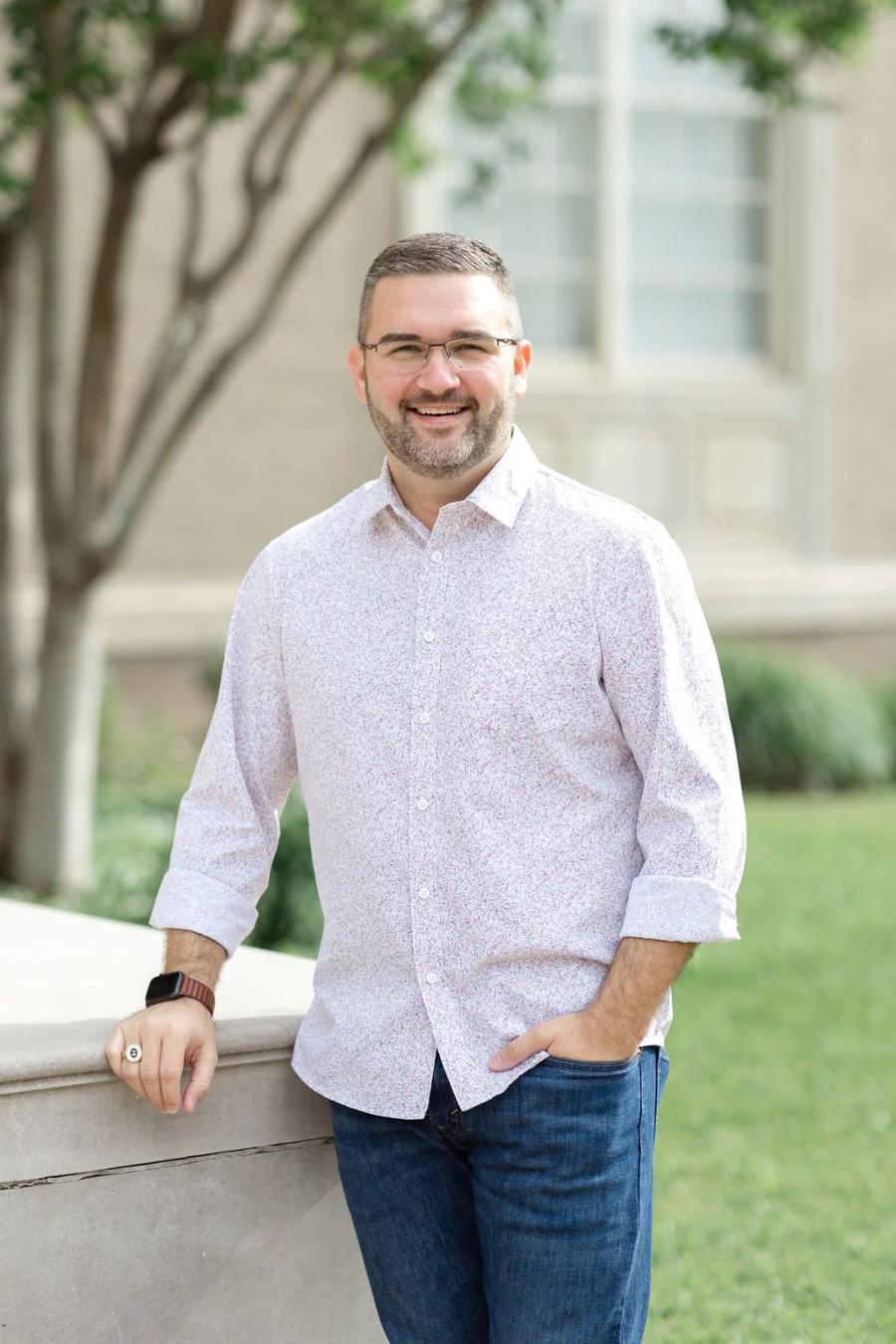
Heath Woolman
Heath Woolman is Lead Pastor of Fruit Cove Baptist Church. He formerly served Southwestern Seminary as the Chief of Staff to the President and as a member of the Educational Ministries teaching faculty. Heath holds a Doctor of Education (Ed.D.) in Organizational Leadership from Southwestern, a Master of Divinity (M.Div.) from Southern Seminary, a Master of Arts (M.A.) from Liberty University, and a Bachelor of Arts (B.A.) from Warner University.