
The BFM2000 says plainly that only men are qualified to serve as pastors. The authors and adopters of our statement of faith did not affirm this clear language in a vacuum but in response to rampant egalitarianism among moderate and liberal churches in the period before and after the Conservative Resurgence. In the last 25 years, terminology for church leadership has become increasingly diverse—pastor, elder, overseer, bishop, shepherd and other extra-biblical terminology have all been employed along the way in diverse (and often, unbiblical) ways. In an attempt to offer clarity, Southern Baptists amended the BFM2000 in 2023 to make it plain that these terms are synonymous. Sadly, in recent years, close observers have witnessed an increasing number of cooperating churches that employ women under the title “pastor” or “shepherd,” or otherwise assign women to high-level ministry staff roles with ambiguous authority (including preaching).
Simultaneously, a debate about further addressing the issue via constitutional amendment has taken place over the last three years without success. Southern Baptists on both sides of the amendment debate have acknowledged the way that egalitarian practice undermines the intention of the BFM2000, raises questions of cooperative identity, and creates confusion over the meaning of “pastor” in local churches. Add in cultural upheaval on questions of gender, and the issue has fomented to the point of toxicity in our Convention. The issue is not whether women can serve in ministry but whether they serve in the recognized office of pastor/elder/overseer—or function in that office while using another title, like shepherd— in violation of the BFM’s language.
Because the Convention’s cooperative relationships depend on clear lines of friendly cooperation, those worried about drift see a growing need to bring sharper clarity and accountability. Opponents to amendment efforts (myself included) have expressed concern about the precedent of using constitutional amendment to deal with the issue at hand. The issue has proven to be a threat to Baptist unity and cooperation. Unlike other matters of consideration and debate over the years, this one simply is not going away. Heath Lambert’s satirical BDEWP renaming proposal suggests another effort to address the issue is upon us. Josh Powell has voiced his support for every iteration of the Law Amendment and Willy Rice has called for a task force to address the issue while expressing a willingness to support other measures (Law 3.0?). Al Mohler discussed the matter at length in a recent video and expessed his continued support for a bylaw amendment (and Mohler is no dummy, he clearly expects an amendment to be attempted again) but also expressed support for all action in the same direction. Even many of those opposed to the reforms proposed by the Law Amendment, including those who thought these efforts wrongfully put women in ministry in the crosshairs of unfair critics, recognize that this debate cannot continue without resolution.
What the Pro-Amendment Effort Sought To Fix
The various efforts to amend the constitution aimed to deal with the issue via bylaws, rather than confession. Its supporters say this accomplishes several things: it brings alignment between confession and constitution; it gives the credentials committee firmer grounds to act when a church deviates; it expedites actions taken to break fellowship with those churches whose practice has deviated from the Bible; and it provides a visible signal to the wider culture about what the SBC believes regarding the pastoral office.
Why the Amendment Effort Failed to Galvanize a Super-Majority
Despite the clarity proponents laud, critics of the amendment raise a number of significant concerns, both theological and practical.
- Some argued the amendment is redundant: the BFM 2000 already affirms that only qualified men may serve as pastors. We don’t want to imply our confession is toothless.
- It creates confusion by policing titles rather than clarifying the actual functions of the pastoral office, since many churches use “pastor” for non-elder roles even with male pastors.
- It potentially threatens Baptist autonomy by pushing the SBC toward stricter, top-down enforcement of confessional alignment.
- It sets a precedent for settling theological disputes through constitutional amendments rather than persuasion and cooperation—a greater concern for future issues with greater disunity than this one (multi-site, elder governance, etc.).
- Many felt that current SBC mechanisms could already address these matters, and the Credentials committee exists to handle it.
- Dr. Jeff Iorg introduced the question of legal problems an amendment could introduce, given the precariousness of evaluating pastoral function and the threat of lawsuits if those evaluations are wrong, which could legally expose the Convention (this point is hotly debated, admittedly, and I personally am unconvinced by it).
The result of recent votes also seems to indicate that alternative language, such as that from Juan Sanchez, also did not meaningfully address the concerns above. Admittedly, many proponents of the amendment effort find these objections to be straining out gnats. Still, many of those same proponents also acknowledge that they are sincerely held and that we can’t seem to find our way to a unified response here.
Here’s what is clear: We can’t keep bantering about this forever, nor can we ignore the issue and allow churches with novel polity to flaunt our confessional identity without concern for cooperation.
Another Complicating Factor: Mistrust of the Credentials Committee
I have argued repeatedly that the convention has the mechanisms in place to deal with this issue. Some have taken this argument to be, “The system works!” At some point, I did probably believe that. But I have been forced to reconsider. The system seems to have ultimately worked in cases like Fern Creek and (their final recommendation related to) FBC Alexandria. However, the system seems to have faltered this past year on the question of Newspring Church (who ultimately withdrew after public outcry made it obvious that their practice was just like that of the previously unseated Saddleback Church).
Having a mechanism in place is not the same as that mechanism working. Making tensions worse is the consistent lack of transparency from the Credentials Committee. The problem is so severe that some have said any amendment would not be a successful remedy to this problem because we don't seem to be able to guarantee that the credentials committee can provide us any consistent standard that will be consistently applied as they adjudicate these issues.
The Credentials Committee should be the group entrusted with the boundaries of our cooperation, and they simply have not proven themselves to be consistent, transparent, or accountable in how these decisions have been made. Repeatedly, the committee has failed to provide the level of transparency on their processes that would create the trust they need to do their job without constant controversy. That is not intended as an attack on any individuals on the committee. This has been going on over many years and the committee has rotated members off and on in that period of time. After the messy removal of Saddleback Church (messy because the Credentials committee took multiple years to stumble towards doing the right thing), you could not have a more open and shut situation than Newspring Church making the exact same argument as Saddleback (women preach and hold the title of pastor, while maintaining an all-male elder board). Except it wasn’t open and shut. It was a giant mess that gave ammunition to advocates of constitutional reform and left those of us that previously put our trust in them to deal with the issue frustrated by their inaction and forced us to reassess their capacity to do what must be done.
Strengthen What is Broken
Those who are calling for reforms are not inventing a problem out of whole cloth. And while I don’t agree with Al Mohler that the convention is imminently “at risk of being torn apart,” I do think it is past time that we stop stepping on the proverbial rake—and more, stop letting Lucy (the Credentials Committee) occasionally rip the ball away right as we go to kick it. This should not be hard. Messengers have shown us repeatedly, in votes to remove churches who compromise on this issue, that it actually isn't.
So where does the problem lie? Not with the constitution. Not with our confession. The problem is with the Credentials Committee. It is clear from the inconsistency of their past decisions, and the frustrations with how they have operated, that whatever process they have in place needs to be strengthened. Who can help with that? The group that should be most readily able to help us here is the Executive Committee.
We would all benefit if the Executive Committee would bring the messengers a proposal for a series of guidelines governing the decision making process of the Credentials Committee. Call it the “Cooperation Guidelines” Or, call it something else. It does not matter and nobody cares, so long as it works.
In that document, the Executive Committee could not only provide definitional clarity regarding the office of pastor—such as the Missouri Baptist Convention just did at their 2025 state convention meeting—but also should provide numerous concrete examples of behavior that constitutes a faith and practice that is no longer closely identified with the Southern Baptist Convention. Such behavior should include:
- women holding the office/title of pastor/elder/overseer,
- women preaching in gathered worship
- women holding a title that is synonymous with pastor/elder/overseers in the same congregation (such as a Fielder Church, where women have been retitled as shepherds, but the lead pastor has also retitled as “Lead Shepherd”).
The guidelines should make it plain that there is no distinction between the office/title of elder and the office/title of pastor. The document should make it plain that the issue at hand is the issue of women pastors, not the litigation of any qualitative standard of pastoral qualification (such as “well thought of by outsiders,” which is impossible to adjudicate at the national level in a way that gender is decidedly not) or the broader questions of women in leadership (e.g. deacons, committees, non-pastoral staff) which has never been addressed by the Convention.
The document should also include a mechanism for its amendment, and amending it should not be easy. I think we learned that lesson when Jared Cornutt successfully made a motion to our Convention to amend our statement of faith in roughly 3 minutes. Southern Baptists should be given an opportunity to review that document in advance of the meeting and debate and amend its contents. It may be messy to debate and adopt—but it will also let us move on from the annual mess of litigating this issue again and again. The end result will be a system in which we can say “this is us” and “this is ours.” The end result will be guidelines that are hard to "leave up to interpretation." Some doubt about the Law Amendment is rooted in if the Credentials Committee would interpret and apply even that correctly. Maybe with Cooperation Guidelines we can finally move beyond this constant debate over amendments and focus on the things we actually cooperate for, the things that fill us with excitement as June draws near instead of dread.
This is not unprecedented. Missouri Baptists provided similar guidance via a task force at their recent state convention meeting. The reason I believe the EC is best positioned to deal with it at the national level is because of the previously expressed legal concerns. If there are concerns, let’s have the group who is well resourced to address those concerns make a proposal to us. And as they work with the lawyers, ask them to help us accomplish what we want to do and not tell us all the reasons why we can’t. There’s been enough of that. It's time to see our leaders take steps to put this to bed instead of taking the strategy of do nothing and maybe it will go away.
What is more likely? That we adopt an amendment in successive years that has now failed over numerous attempts from numerous advocates of varying levels of influence due to the concerns of many or that we adopt a series of well-written and thorough guidelines produced through a deliberative process from our Executive Committee to strengthen the system we already have? I think the latter. More than that, it is healthier both as a process and as a precedent for our Convention to receive this kind of guidance from the group tasked with our ad interim governance in consultation with our legal counsel, Great Commission Council, and senior leaders rather than for us to continue to try rewriting our Constitution from the floor of the Convention.
This work could be done by a Task Force—but the Executive Committee is the historic home of similar efforts, with the resources of our legal counsel and breadth of experienced leaders, and is already a broadly representative group of SBC men and women. Whether or not you think the concerns are well-founded, you cannot deny they are an obstacle to the Amendment’s passage in previous years. If you think 40% of our messengers voting to eliminate the ERLC sends a message, then maybe 40% of our messengers rejecting the Law Amendment also has a message we should receive: try something else.
I agree with those who are calling for reform. I have personally followed the credentials process with three churches, each of whom are no longer considered to be in friendly cooperation with the Convention, because of their compromise on this issue (including the Atlanta church who went viral after celebrating the failure of the Law Amendment because they had a woman pastor on staff–I contacted them directly, and then sent it to Credentials when they refused dialogue). I agree with those who are calling for confessional fidelity. I am supportive of those who don't just tweet about compromised churches, but reach out to them and offer correction or otherwise recommend them to the Credentials Committee as not in friendly cooperation. I agree we need to address this issue. Maybe this time, we can try a different method— one that is consistent with our governing documents as written. Missouri Baptists did this very thing recently. Maybe they have shown us a path forward. Let’s learn from them, and move forward together.
Editor's Note: As a part of its commitment to fostering conversation within the Southern Baptist Convention, the Baptist Review may publish editorials that espouse viewpoints that are not necessarily shared by the TBR team or other contributors. We welcome submissions for responses and rebuttals to any editorials as we seek to host meaningful conversations about the present and future of our convention.
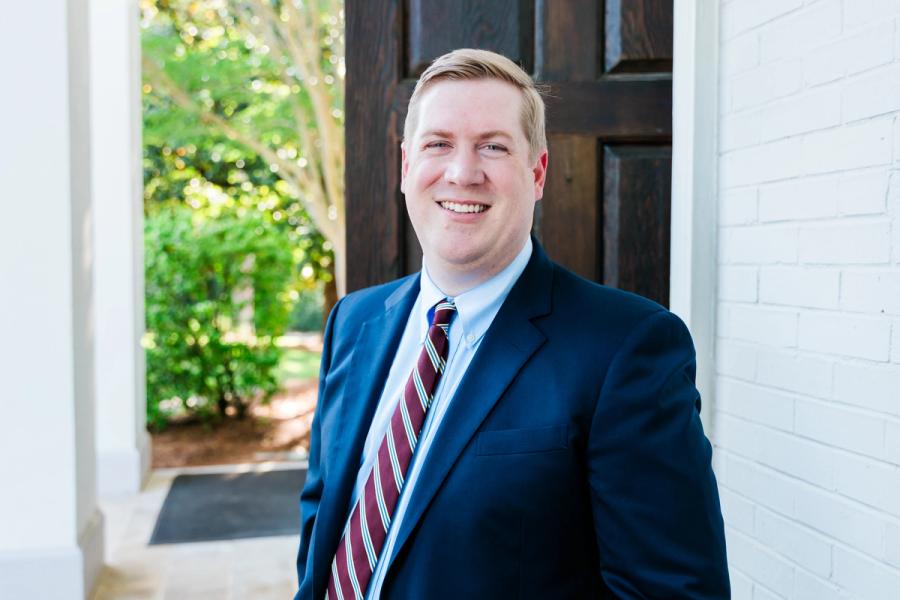
Griffin Gulledge
Griffin Gulledge is pastor of Fayetteville First Baptist Church in Fayetteville, GA. He is married to Rachel. Together they have two children. Griffin is a graduate of Auburn University (B.A.) and Samford University's Beeson Divinity School (M.Div.). He is currently completing his Ph.D. at Southeastern Baptist Theological Seminary in systematic theology. Previously, he served as Director of Marketing and Communications at SEBTS, moderator of his local association, and as a member of the GBMB Executive Committee. In 2021, he was recipient of the John Leland Religious Liberty Award. He is a founder and member of the leadership team for The Baptist Review.