
In 2024, I wrote an article entitled Thinking Through the Law Amendment that got a good deal of traction. Two years later, I think it stands up and has immediate relevance to a new motion: the Mohler amendment. The new amendment is not identical to the first—but the stakes are the same and the larger questions are the same.
There are a least a few points there that remain extremely relevant:
6. Policing the vocational functions of women in ministry who are not ordained and do not bear the title or office of pastor is ruinous to our cooperation and trust among women in ministry.
7. It is possible to create guardrails to avoid these misapplications.
13. The amendment could be a tool for responding to a particularly prevalent compromise.
I’m only including the headings here. You’ll have to read that full article for the explanations.
While many of my 21 points thinking through the Law Amendment are applicable here, the Mohler Amendment and the Law Amendment have some key differences. Because of that, I want to add to the initial post, this time thinking through the Mohler amendment (and yes, I am calling it The Mohler Amendment, not as a criticism of Dr. Mohler or the substance of the amendment but as an acknowledgement that calling it the The Truth & Unity Amendment simply removes all objectivity from the discussion. Jennifer Rash made a similar point in The Alabama Baptist about the marketing language, and while I don’t agree with some of her argument, that point is well taken).
My hope here is not to persuade anyone towards any point of view, but to consider what all is “in the field” related to this amendment. Additionally, before I say anything else, there’s a fundamental assumption to what comes next: the office of pastor is reserved for men and preaching in gathered worship should only be done by biblically qualified men. With that in mind, here are 21 theses on the Mohler Amendment:
1. For many, the Mohler Amendment makes important improvements on the Law Amendment.
Many critics of the Law Amendment were outspoken on its exclusion of any language about function. Dr. Mohler’s motion remedies that and speaks to the primary concern related to pastoral function: preaching in gathered worship.
2. Those whose primary objection was related to a solution coming via constitutional amendment will likely not be persuaded to vote for this amendment.
There is another large contingent within the convention who simply did not want to settle this issue via constitutional amendment. For some, they believe it undermines the Baptist Faith & Message by creating a category of “super doctrines.” For others, a constitution simply shouldn’t be regularly tampered with. Still yet, others think this sets a precedent for litigating doctrinal disputes via the amendment process. Whatever their reasons, those who opposed the Law Amendment on such grounds have been given no reason to change their mind by the Mohler amendment.
3. The circumstances have changed since the failure of the Law Amendment—on both sides!
In particular, there is new evidence both for and against trust in the Credentials Committee. On the one hand, some will point to issues with Newspring Church not being decisively recommended as “not in friendly cooperation” by the CC (despite seemingly obvious precedent) as evidence that they should not be trusted without the clear guidance of a constitutional amendment. At the same time, assurances have been given about Credentials Committee processes being refined. Depending on your point of view, you may have reasons to trust the process much more or somewhat less. Will the Credentials Committee speak up publicly before we get to Orlando? We’ll see. They certainly seem to be the silent partner in this conversation, and there are a lot of people that would like to hear from them.
4. Dr. Mohler’s motion could be seen as congruent with actions taken by SBTC and Missouri Baptists. Still, Dr. Mohler is going further than both of them.
In the case of both state conventions, action was taken to strengthen their ability to act in removing churches whose practice is out of step with the clear teaching of the Baptist Faith & Message regarding the office of pastor. At the same time, Dr. Mohler goes a step further. Neither Texas nor Missouri took steps to remove churches where a woman preaches on special occasions in the worship gathering. In fact, the Missouri Baptist report on women in ministry decisively concludes, “Preaching or teaching roles in a worship setting do not necessarily constitute holding the office of pastor. A pastor in authority may oversee guest preachers and teachers.”
5. A major part of Dr. Mohler’s concern is for the efficiency of our meeting, and his comparisons to the LGBT amendment are instructive regarding his intentions.
In The Baptist Review’s podcast interview with Dr. Mohler, he repeatedly emphasized the need for efficiency in our meetings. At the heart of his argument is that the entire discussion about sexuality was put to bed by a constitutional amendment in the 90s. He reiterated this point in a recent thread on X.com.
(There is something to be said about the slow process surrounding situations involving New Heart Community Church in 2014 and Broadway Baptist Church in 2008-2009, but these are exceptions.)
6. Technically, the amendment does nothing to reduce the possible time allotted to the issue at successive annual meetings.
Nothing about passing an amendment changes the potential allotment of time to the issue in the meeting. The question of efficiency mostly is answered in Bylaw 8, which requires the messenger body to hear any appeal from a church deemed not in friendly cooperation by the Credentials Committee and subsequent vote from the Executive Committee. There is no way around it, and the efficiency of handling this issue is entirely in the hands of how many churches choose to appeal. The system is built with a prioritization of due process, not in favor of efficiency. For that matter, even if a result is patently obvious, few Baptists would want to change a system that gives churches an opportunity to speak for themselves.
7. The amendment very likely could have the force of making an appeal seem impossible, thereby reducing this issue to zero in future annual meetings.
Dr. Mohler believes that a constitutional amendment not only empowers and instructs the Credentials Committee but also provides the force of the messenger body in successive years to say, “this matter is settled, and we cannot agree to disagree on it.” And, as a result, the likelihood of appeals could drop to zero. There is a cultural force to amendment.
8. It’s possible that past messenger decisions have already sent a message on this issue.
By that same token, no church has ever successfully appealed and for all of the churches to have been deemed not in friendly cooperation related to women pastors, only three have even tried to appeal (Saddleback, Fern Creek, and FBC Alexandria—which was technically a result of a floor motion to unseat messengers which bypassed the normal process). Each was decisively rejected by the messenger body. And when you kick out the biggest church in your convention (Saddleback), with a pastor who has discipled over a million pastors (just kidding), that sends a message. Is it likely that the number of appeals will go up in years ahead after that? Even in that year, three other churches were deemed not in friendly cooperation and did not appeal. Even from the beginning, most churches are not appealing.
9. If not for extended debate about proposed amendments, this issue would be consuming very little time at the convention whatsoever.
Despite all of that, we have spent a lot of time on this issue. We amended the Baptist Faith and Message. We debated the Law-Sanchez Amendment for three years. We have had resolutions. Motions. Task force requests. The Cooperation Group. We aren't actually spending very much time making decisions about churches who have women pastors. We are spending a lot of time making decisions and hearing proposals, which have nearly all failed, on how to change our process. Are we inefficient because of appeals from churches with divergent theology and practices or because of the unwillingness to let the Credentials Committee deal with the issue?
10. Bart Barber’s religious liberty proposal related to the Mohler Amendment isn’t serious. But, it’s revealing of a larger question.
Former SBC President Bart Barber has suggested we should add a companion statement removing churches who are out of line with our statement of faith on religious liberty by advocating for establishmentarian Christian Nationalism. Bart didn’t make his proposal in a video with a cow, so it’s unlikely he’s serious. But the more likely reality is that Bart is satirically drawing more attention to a common objection: we are amending our constitution to disfellowship churches over one part of the Baptist Faith & Message while ignoring other parts of it that some view as more central to our historic Baptist identity.
Consider, for example, that Mohler’s amendment draws a line in the sand in a place that even our statement of faith does not. The Baptist Faith & Message is clear that the office of pastor/elder/overseer belongs to only men—but makes no mention of women preaching, and in our history a number of prominent Conservative Resurgence leaders made a habit of it without objection (for example, on Mother’s Day). I am not defending the practice. I think it’s unbiblical—I’m only drawing attention to historical practices here.
11. The “such as” clause is intended not to expand the field of inquiry for the Credentials Committee but to narrow it.
Dr. Mohler has repeatedly emphasized that the “such as” clause in his motion is intended to narrow the field, identifying women preaching as the primary problem and giving clarity to the Credentials Committee to address churches which make a practice of having women preach.
Consider Dr. Mohler’s words in response to my question during our interview. He says, “…my proposal is written with that ‘such as’ in order to give clarity. That's what the SBC is speaking to. And so, I don't think there is any real political reality that some other issue is going to be used as under the category of function. Again, it could be right now if a church wanted to bring—if a messenger, I should say, wanted to bring a challenge to any church sending messengers, on the basis of a woman serving as x, that challenge could be brought. I don't think it would gain any traction on the floor of the SBC. And so, one other point about this is, it is just to say, this is really what we're talking about. When we say ‘such as’ here, and again, I've vetted this language as thoroughly as I know language can be vetted. When you say ‘such as’ here, it means we're agreeing on this. This is what we're really agreeing on. And I think that's where Southern Baptists are so overwhelmingly in agreement.”
12. The “such as” clause will very likely be used to attempt to expand the field of inquiry well beyond women preaching.
Despite Dr. Mohler’s intentions, there is considerable disagreement on both sides of the issue on the force of the “such as” statement. For example, Sam Webb, a vocal Baptist lawyer and messenger who has advocated favor of the broad enforcement side of this issue of policing the function of women in ministry (for lack of a better descriptor), rebuffed Dr. Andrew Walker on social media for his suggestion that the “such as” clause is restrictive. Presumably, Bro. Webb would prefer broader application of Credentials Committee review for churches where women “function as a pastor” without bearing the title. Webb is not alone, although Dr. Mohler responded in our interview that such views belong to the “digital neverland.”
Critics of the motion fear the same thing. For many of them, not only do they not want women in ministry in the SBC who are not pastors to be deemed “not in friendly cooperation” due to the question of function, they also don’t want them to serve with a target on their back, with the broad enforcement advocate policing them, reporting them, or publicly making an example out of them for the sake of a larger agenda to expand the Convention’s understanding of “such as.”
Having said that, Dr. Mohler has insisted that he simply does not believe Southern Baptists would ever go for that kind of broad enforcement approach. SBTS Professor Denny Burk has made a similar argument. I take them at their word, and appreciate their clarification on that point. Dr. Mohler has also been explicit on this point. He said on the CBMW podcast, “Sisters, you are absolutely essential to everything the SBC is and wants to be, and everything the SBC does and wants to do. And you have been since the very beginning. We’re talking about heroes and heroines in the history of the SBC.”
This emphasis is important. And for that matter, it is important that if the SBC passes this amendment, those who say they do not support broad enforcement should be just as willing to defend women who serve within these parameters from being publicly shamed as they often have been now, despite not holding the office of pastor or preaching in worship. If cooperation requires policing the boundaries, it also requires standing with people who are well within them.
14. Dr. Mohler is correct that Southern Baptists are highly unlikely to show an appetite for fighting over tertiary questions related to this amendment (women teaching Sunday School, women deacons, women as non-ordained church staff, etc.). But appetites change.
No institution wants to be in the habit of regularly amending its governing documents. Among other reasons, that is why any attempt to do so must consider unintended consequences for the language they adopt and do their best to remedy those consequences ahead of time. Dr Mohler was asked by Rob Collingsworth in our podcast, why not simply make it explicit? Why not make it only preaching and no other functions.
Dr. Mohler’s answer was interesting: “We don't want to bind the convention, and again, there are legal reasons constitutional language is written as it is written. We don't want to make it more difficult for the convention to act where the convention does clearly by consensus need to act. We need to make certain they don't have to revise the Constitution at that point.”
What Dr. Mohler is saying here is very careful. All of these claims go together. First, the Convention is unlikely to ever support any stringent application of pastoral function (beyond preaching) to women in exclusionary ways. Second, we should not amend the constitution often so we don't want to narrow our language so much that if we wanted broader enforcement on some other area that qualifies as function, we would be limited by our constitution and not able to act or be forced to amend it again. Which of course means that what we need to do is intentionally leave this language open, for the sake of perhaps currently unforeseen circumstances, while that the appetite of the Convention will always be towards a narrow application.
Critics will say, “yes, but who thought in 1989 that Southern Seminary would be a bastion of Calvinism in 2015? Or in 2016 that within a decade Paige Patterson would be a pariah? Or that Paul Pressler’s death wouldn’t even be recognized by a single Southern Baptist entity?” Circumstances change, so we shouldn’t necessarily count on our present assumptions as a guarantee of our future decisions.
15. It is true that any attempt to disfellowship could be made now. But it would not be made with the force of constitutional support.
Dr. Mohler took care to point out that these attempts to disfellowship churches over the function of women in ministry could be brought now with almost no chance of succeeding. He is right. At the same time, some might ask if one of the reasons they have no chance of succeeding is because the Credentials Committee has no binding guidance forcing them to consider function apart from titles and offices in ways that go beyond women preaching.
Anyone considering this issue at this point has to recognize that there is a delicate balance of constitutional and cultural pressure here that affect how these decisions will be made.
16. Because the amendment can be used in more expansive ways, there will likely be amendments to it attempting to limit questions of function to only preaching.
There is quite a bit of buzz behind the scenes about amendment efforts ranging from efforts to lobby Dr. Mohler to efforts to amend his motion from the floor. An amendment might say something like this: “6. Does not affirm, approve, or endorse a woman to serve in the office of pastor/elder/overseer or to preach to the assembled congregation.”
17. Many will refuse to vote for this amendment unless the function clause is definitively restricted.
Many wonder if Mohler will consider amending his Truth & Unity Amendment in this way as a show of deference to the ‘unity’ side. Because of the concerns listed above, there will be a large number of people who potentially will not support Mohler’s motion on the basis of unintended consequences. They simply don’t want to leave the door open to broad interpretations of the “such as” clause.
18. Many will refuse to consider an amendment to the motion simply because fatigue has set in on this issue and its related debates.
At the very same time, there are a lot of Southern Baptists who simply are persuaded by Dr. Mohler’s master stroke of a final appeal in his announcement video: “Let’s get this done.” Many people are desperate to move on from this issue and will see Mohler as a trusted leader and reasonable voice and will vote for the motion simply to be done with it. And with 61% of the vote in favor of the Law-Sanchez Amendment, that simply may be enough.
19. It is notable how little vocal support this proposal has among SBC leaders (state executives, entity heads, and past presidents). We have a very interesting week ahead as we hear from many of them for the first time on this issue.
Given Dr. Mohler’s position and stature, you’d expect wide support from the Great Commission Council and other state and national leaders. And yet, until now, it simply hasn’t come. That seems impossible not to notice, and I think that messengers will be looking to many of them in Orlando to provide guidance on this complicated governance debate. That could end up being the story of the whole issue when it’s all said and done.
As a rule of thumb, state executives tend to go quiet when they are unconvinced that an issue will not divide pastors in their state. Word on the street is they have had an opportunity to dialogue with Dr. Mohler on this motion. Despite that, they’re not speaking up. That does not mean they’re against the motion. But it likely does mean that they’re telling us that they do not think Southern Baptists have coalesced around this action.
20. There are still outstanding legal concerns related to motions that amend the constitution and while I don’t fully understand them, Dr. Iorg’s willingness to speak to them is no small thing.
Last year, Dr. Iorg spoke against the Law-Sanchez amendment on the basis of legal complications that such an amendment introduces. Does that apply here as well, with different wording? I have no clue. Some were made unhappy by his comments, others confused, others helped—but most agree that his carefully worded opposition likely buried the effort. And yet, hardly anyone has publicly enumerated what those legal concerns might be. Only Dr. Iorg knows if he will make the same argument this time and nobody knows what difference it might make if he does.
21. The Presidential Candidates will affect the success or failure of an amendment effort.
Both Josh Powell and Willy Rice can expect to be asked about Dr. Mohler’s motion and attempts to amend it. How they respond—especially if they are agreed—will have an effect on messengers one way or another. This Presidential race is a big one, and closely watched, and this is one of the few immediate, pressing issues where they will have an opportunity to weigh in and potentially distinguish themselves from one another.
That's a lot of words to say, Friends, we have much to consider.
And with all of that said...
I might as well make a prediction.
It is not often that I pull out my crystal ball, but I think I’ll make a few predictions here.
1. The greatest fight over this amendment will be on the attempt to amend the “such as” clause of Dr. Mohler’s proposal. Will Dr. Mohler consider amending his own language prior to making the motion? I don’t think he will.
2. That amendment attempt, if not taken as friendly by Dr. Mohler, will fail.
3. If that amendment fails, especially if Dr. Mohler personally opposes it, this vote could be much closer than many expect.
See you in Orlando.
Editor's Note: As a part of its commitment to fostering conversation within the Southern Baptist Convention, the Baptist Review may publish editorials that espouse viewpoints that are not necessarily shared by the TBR team or other contributors. We welcome submissions for responses and rebuttals to any editorials as we seek to host meaningful conversations about the present and future of our convention.
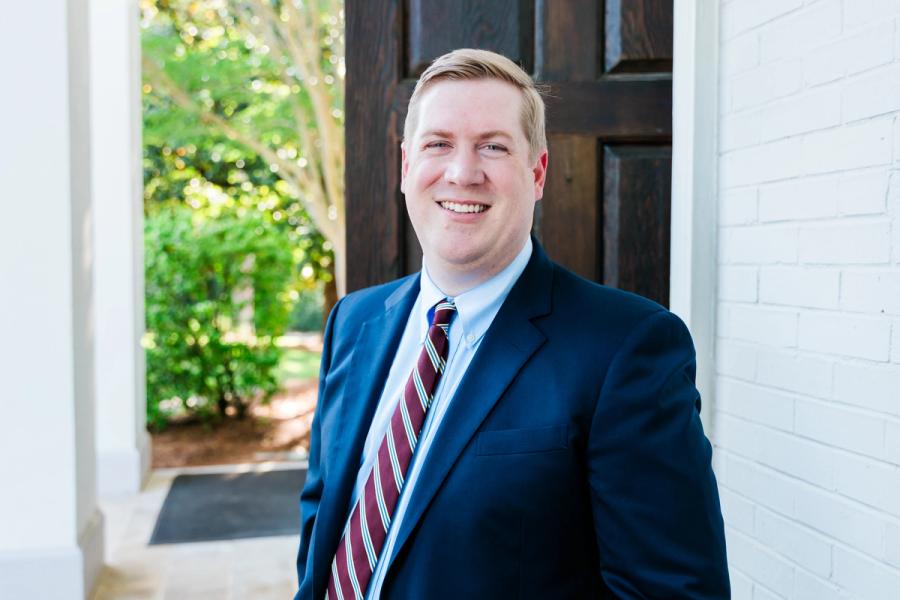
Griffin Gulledge
Griffin Gulledge is pastor of Fayetteville First Baptist Church in Fayetteville, GA. He is married to Rachel. Together they have two children. Griffin is a graduate of Auburn University (B.A.) and Samford University's Beeson Divinity School (M.Div.). He is currently completing his Ph.D. at Southeastern Baptist Theological Seminary in systematic theology. Previously, he served as Director of Marketing and Communications at SEBTS, moderator of his local association, and as a member of the GBMB Executive Committee. In 2021, he was recipient of the John Leland Religious Liberty Award. He is a founder and member of the leadership team for The Baptist Review.