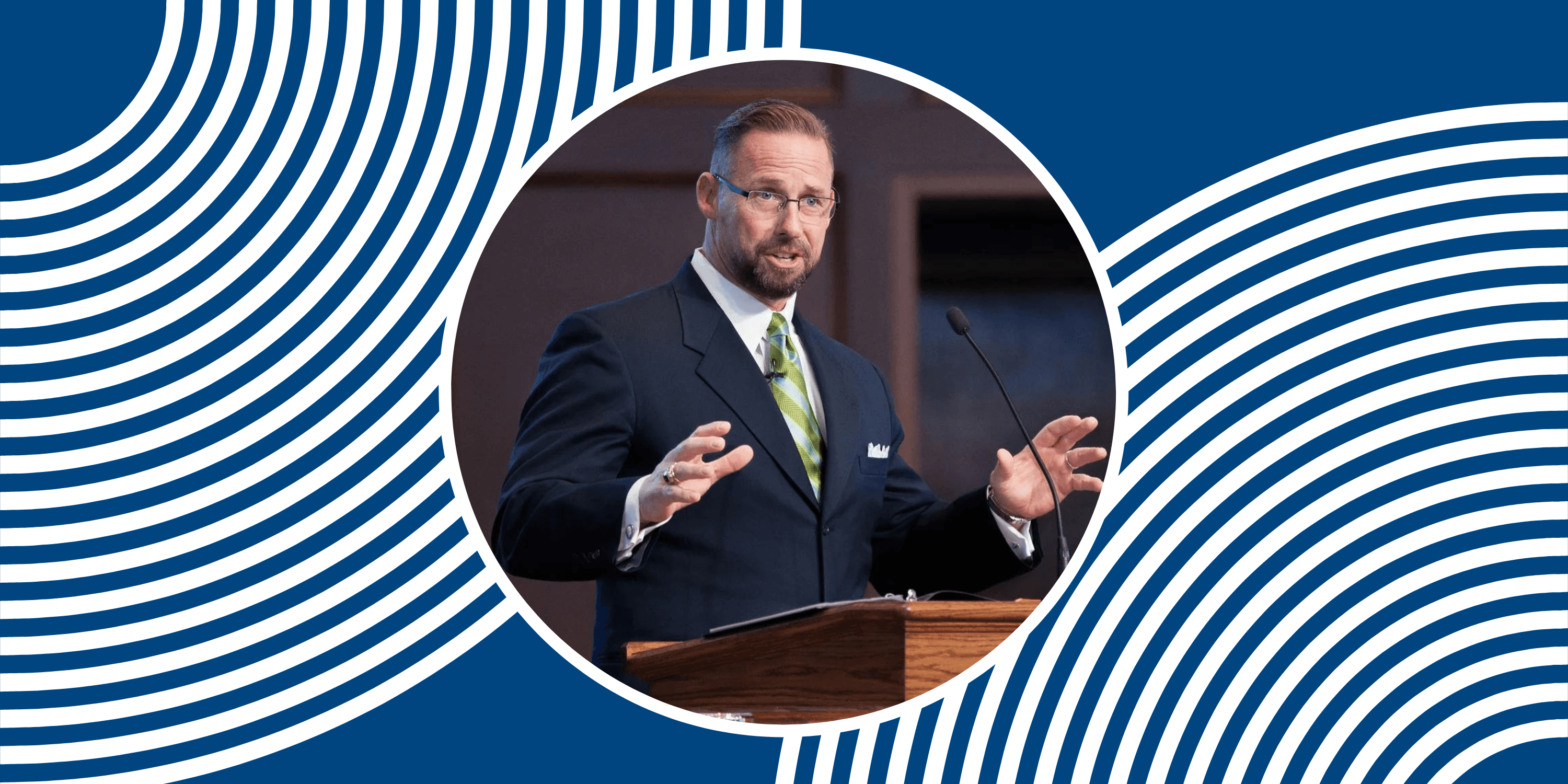
In this episode, Clint Pressley joins David Sons and Andrew Hebert for a conversation about the Southern Baptist Convention and the SBC Presidential election. This is the first of five interviews with SBC Presidential candidates.
The Baptist Review exists for Southern Baptists to engage in good faith discussion about the issues, current events, and questions that matter in our Convention.
You can subscribe to The Baptist Review podcast wherever you get your podcasts, and by clicking the links below:
Apple Podcasts | Spotify | Youtube
The North American Mission Board
Listen to the Reconstructing Faith podcast from Trevin Wax and the North American Mission Board.
Listen on Apple Podcasts
Listen on Spotify
Lifeline Children's Services
Click here to learn more about adoption services from Lifeline Children's Services.
Southeastern Baptist Theological Seminary
Click here to learn more about Southeastern's degree programs and how they can equip you for ministry and mission
_____________________________
Read a Transcript of this Episode below:
This transcript was provided by Rev.com, and has not been closely revised. Please refer to the recording for clarity on any confusing transcriptions.

Join the Baptist Review for our Presidential Forum in Indianapolis on Monday, June 10 at 9pm. Registration is required for attendance.
David Sons (00:02):
Hey, thanks for listening to this episode of the Baptist Review podcast. I'm your host, David Suns, and we continue today in our interviews of Southern Baptist Convention Presidential candidates for this June in Indianapolis. And today I'm joined by Pastor Clint Presley. Clint, thank you so much for taking the time to spend with us today on the podcast. [Banter]
Hey, Clint, obviously Andrew and I have known you for a little while. We've been friends. I know that you're pretty well known around the SBC to most folks, but I do want to begin our interview by just maybe giving the opportunity for you to share a little bit about your personal story about the pastor, about the church that you pastor, and so maybe you'd start by just sharing a little bit about your testimony, about your call to ministry and a little bit about the church that you serve now.
Clint Pressley (01:12):
Yeah, thanks man. Really, I appreciate you guys doing this and having me on. I was raised here in Charlotte in a Christian home, but we went to a Presbyterian church, PCUSA, a liberal Presbyterian church and never really heard the gospel except maybe in the Apostles Creed. So I had it memorized but didn't know the gospel when I was 11 years old. The church hired an intern for the summer and he explained the gospel to me in a way I could understand it, that I was a sinner, my need for a savior, what Christ had done for me, his death and resurrection. If I put my faith in Christ alone, I'd be saved. Man, I did. I asked God to save me by faith in Jesus. My grandmother gave me a hardback living Bible, which is kind of the Bible. Started reading it and God told me that led me to Christ, said, look, you got to pray now and read the Bible.
Clint Pressley (02:05):
So I started read the Bible and praying. By the time I was 15, we were visiting some friends in Virginia and they're the kind of friends that make you go to church if you're staying over with them. We were there for the weekend and we went to First Baptist Church, Roanoke, Virginia. It was the first Baptist church I ever set foot in. It was 15 years old and I had never heard preaching like that. I mean, it was powerful. I had a book standing up there was yelling at us, sweating, and I already thought that's what I wanted to do is be a preacher. But that day I knew I wanted to be a Baptist preacher, so we came to get back home. We joined Hickory Grove when I was in the 11th grade. Here's why I learned discipleship, started learning all of the layers of Southern Baptist Cooperative Program missions.
Clint Pressley (02:54):
Went off to college, while in college, played football there two or four years and then went to Southwestern Seminary. It's where I met my wife, Southwestern. She graduated MDiv from Southwestern before I did. She's a couple years ahead of it, and I didn't want to be in school. I wanted to preach, and so I quit seminary. Me and Connie, we left Texas and moved to Mississippi. There was a church there that I had preached a couple of times in. They were desperate, 30 people, and they hired me. I'd been married six weeks and started preaching. I was 23. I could live in the house and they paid me $150 a week and then I could do something else, maybe drive a dump truck, and I coach football and substitute talk and pretty soon you find out, okay, you want to preach. You don't know anything. I don't know.
Clint Pressley (03:50):
I mean, I love Jesus, I love the Bible, I love people. I didn't know how to get 'em all together. And so I started back to seminary in New Orleans and it was 140 miles south of where we were living, and I'd drive down every morning and drive back every afternoon. And so that's how I got my seminary degree. Served two churches in Mississippi. I came back to Hickory Grove. They knew me from being here. I was an intern in college. Came back, was on staff here from 99 to 04. Then I went to Dauphin Way—Dauphin Way had been through a hard time. We went there in 04. I thought that's where I'd be, man. I loved it there. I loved everything about Dauphin Way. And so we spent six years there. In 2010, the former pastor here who was also the guy that baptized me, he is my pastor was retiring and asked me to come back. The church did to do a transition, and so I came back in 2010 at Hickory Grove and has been here ever since.
David Sons (04:51):
Wow. So this is your third stint, really? Third season of life at Hickory Grove. That's pretty unique.
Clint Pressley (04:57):
Yeah, I mean, yeah, it really is. I joined this church in 1985 and then came back in 99 and then came back in 2010. Wow.
Andrew Hebert (05:09):
You've been asked to be nominated for SBC President before. I know that because I've asked you before a number of years ago, and you've prayed about it from time to time, you've also nominated other men to be SBC President, but this is the first year that you've allowed yourself to be nominated. So my question is why 2024? What's different about this two?
Clint Pressley (05:29):
So I almost did it the year that Ed—he served a term and then wasn't going to serve a second. So I almost did it then. And then I'd heard that Willie Rice was going to do it or that he was thinking about it. So I called him and he was like, well, if you're going to run, I don't want to run. And he is like, he really feels like he needs to do it. I was like, all right, well, I'm not going to run against you. So I withdrew before I even really announced and he said, why you nominate me? Then of course all that happened. And so I thought about it then and then after this summer I was approached by different, we all have kind of different segments of the SBC and from a couple different quadrants of the SBC, I was called and they said, “Are you thinking about that? Would you think about it? Hey man, you need to run next year.” So we started praying about it. Me and Connie and I love the convention. I feel like it's been in this weird sort of almost angry spot, and I'd love to be a part of seeing it cool some of that down and turn our attention back to what we do so well when it comes to missions. So I figured I would take a run at it.
David Sons (06:50):
Clint, all of those—you talked about a couple different sectors of the SBC folks—all of those sectors are represented by different group text messages where the real action occurs within the SBC and so.
Clint Pressley (07:02):
Right, right.
David Sons (07:03):
Well, Clint, it's good for us. I think one of the things that we've tried to do is personalize these interviews a little bit to where I think sometimes in the run runup to a presidential election, you guys can just be defined by the sum of your positions on specific things. And so I think it's important for anybody who's voting in Indianapolis for president to get a little bit of the picture of the history and the man who's actually running for president. So we appreciate certainly you sharing a little bit about your story and testimony and about Hickory Grove and the churches you serve. But we do want to talk a little bit about specific issues, particularly a few issues that I know are going to be discussed and debated and decided upon in Indianapolis this year and then will have implications for the SBC in the future.
David Sons (07:47):
And one of those is around the issue of abuse reform. Obviously sexual abuse reform has been a major piece of each of the last three SBC meetings and really going back to the Houston Chronicle article and then what was decided in Nashville in 2021 with the motion for the executive committee to waive attorney client privilege and to have a third party independent investigation. At the time, and correct me if I'm wrong here, but you were in favor of the executive committee waiving privilege and of the independent investigation into the executive committee's handling of reports of sexual abuse, which ultimately were published in the guidepost report since then, the investigation and then the subsequent litigation as a result of that report, including A DOJ investigation, it's really been costly for the EC and the SBC, which has led a lot of people, not a lot, but it has led some to criticize others to maybe escrow cooperative program funds or others have left the SBC entirely, generally kind of citing a concern that too much money has been spent to pay lawyers and settle lawsuits and knowing what we know now. So three years later, would you still advocate for an independent third party investigation in the manner in which it was done?
Clint Pressley (09:17):
Man, that's a good question. I don't dunno. I really don't know. I'm not sure that I would given the results of the investigation. How so? It not like we found all of this that oh gosh, we've uncovered all this terrible, which is of course sexual abuse is terrible, but we didn't uncover what we thought. I remember reading the report and thinking, oh, what stood out the most was what had happened with Johnny Hunt. And so I'm not sure I would because really at the beginning I wasn't. Some of it you didn't understand, like you first hear, okay, we want to waive attorney client privilege, and you're thinking, yeah, open everything up. That is kind of what we do where you say, see everything, see it all. I think a lot of us, there are some of those unintended consequences seeing so much money that has been spent.
David Sons (10:19):
One of the things that I think has arisen in the last couple of weeks perhaps, I know this was a part of a previous interview you did with other SBC presidents that Tom Asell hosted on spaces a couple weeks ago. There's been a little bit of some debate about whether or not it's fair to characterize abuse within the SBC as a crisis. That was a question that was asked to you in that spaces interview with Tom, and your answer was you stated sexual abuse is not a system-wide crisis, but it is a crisis. And I thought maybe you could kind of elaborate some on what you mean by that and how maybe in your opinion, the convention should move forward in addressing abuse reforms.
Clint Pressley (11:02):
Yeah, I think too when you hit it like this, say is it a crisis or is it not? You pull out some of the way to talk about it. I think that if this church had a case of sexual abuse, it's going to be an absolute, I mean four alarm fire here at Hickory Grove. So we will put that in the category of crisis that you want to run to it. The Christian impulse is to do all you can to make sure you put the fire out, help the people that are victims, and then prevent it from happening again. So to say it's a system wide, I'm not willing to go that fault. I think that what you have here are some really terrible things that happened in local churches that are Southern Baptists, and by God's grace we've got sense enough to try to do something to help those churches.
ClintPressley (11:53):
And that's where I think that some of the good of the task force, I mean honestly, you go to the website and the ministry toolkit. I mean seriously, you think every church of every size can benefit from just follow the directions. Just do that because previously we wouldn't know what to do. You wouldn't be sure as to, okay, I know I'm supposed to call the police, but what else do I do? And to have sort of a clear step-by-step approach when it comes to training, screening and protecting and then reporting. That's been very helpful. So some of what has happened has raised the awareness and then made churches, I think see some of their glaring deficiencies that they just didn't know they had that you just had not thought about previously. So 2019 forward has changed so much about how we would approach preventing and dealing with sexual abuse.
David Sons (12:58):
You feel like the, I say reward, I don't mean it in that you feel like the good of that what you said a moment ago that churches are better prepared, that they understand how to prevent abuse better, that they understand how to care for survivors, that they understand these pieces, those things are good things that have come out, that churches are better prepared. Do you feel like those things could have happened apart from the third party investigation or do you feel like those things are actually that had to happen in order to get us to the place that we're at now where churches are in some sense better prepared to handle these issues?
Clint Pressley (13:33):
I don't know if it could have happened with or without the investigation. I do think leading up to the investigation, I mean, when we hear all of the sexual abuse talk, what happens is it scares us to death. If you're a pastor, you're a church. I mean, you immediately think about your people, your church, what if. And so I think that that started the process of, hey, we need to do something. Now, whether or not we would've gotten to where we are without the investigation, I don't know. But the task force to me, they've done yeoman's work and just that and getting us there so that any church can go and benefit completely if every church will just do that. I mean, we are light years ahead of where we were in 2019. Yeah.
Andrew Hebert (14:24):
Well, I'd like to ask about something a little bit more recently. This has been all over the news, but several of our SBC entities participated in filing an amicus brief in the case of Samantha Ery in Kentucky. And since that time, Bart Barber, our current president, has said this is something that probably should not have been done. The executive committee SBC executive committees formed a subcommittee of trustees to evaluate how the EC makes those kinds of legal decisions going forward. So in other words, I think that's an implicit acknowledgement, Hey, this was a mistake and we need some kind of safeguard to make sure this kind of thing doesn't happen again, Dr. Moeller made a statement on behalf of Southern just saying, basically deferring to legal counsel at Southern. And then lifeway hasn't said anything about it one way or the other, and I think a lot of survivors survivor advocates, but really rank and file Southern Baptist look at this thing, scratching their heads and say, this seems to be going in the opposite direction of caring for abuse survivors. And I think as stunningly, a lot of us are just wondering why the radio silence on this thing? Why aren't our leaders publicly owning this and acknowledging and explaining what they've done? So I'm just curious what your take on all of that is. I know you're on the board at Southern and used to be chairman years ago, but as an SBC presidential candidate, what would you say to Southern Baptists who are wondering why was this done?
Clint Pressley (15:54):
Yeah, I mean, I think that the why behind it is getting all of the advice from the lawyers and what you have to do to make sure you're going to win the case you're in. As I understand it that the amicus brief was a terrible necessity and not a signal to say you're not caring for survivors.
Andrew Hebert (16:23):
Let me ask a follow up about that because I think one of the things, hearing your answer about the third party investigation, which just full cards on the table, I was part of the sexual abuse task force, the original task force that oversaw that investigation. We were not the investigators, but we were that go-between between the executive committee and guidepost to make sure that it happened. I think one of the things that was surprising to me when I read it, I'm kind of like you, Clint, when I saw it, there maybe wasn't as much of what I was expecting to see, but there were some cases that I think maybe the most egregious examples were cases where executive committee employees really mishandled certain reports of abuse on the council of lawyers. So talking to lawyers, what should we do? How should we respond? And the attorneys giving them advice to protect against liability
Andrew Hebert (17:19):
Really gave them bad advice and they went with what the lawyer said. And so I'm thinking now about the amicus brief and I'm thinking, okay, you're listening to the attorneys once again trying to protect our legal interests, but maybe at the expense of a victim of sexual abuse. How would you navigate that? I know I'm asking a hypothetical here, but as SBC President, you're going to be hearing from lawyers from SBC lawyers whose interests are to protect us legally, but at the same time we have a responsibility to protect survivors and do this just and so just talk through how do you navigate that? How would you navigate that as SBC president? Yeah,
Clint Pressley (17:59):
It really is. It's one of those dilemmas you get put in because as the president of the convention, how much authority do you really have to even do those things? You know what I'm saying? You can provide influence and talk to, but you don't necessarily have the authority to do any of that. I mean, I think that Bart would even admit that's outside of his ability to guide. He can speak to it, he can't make the decision.
Andrew Hebert (18:32):
And I think he wrote about that and just basically said, I'm not sure I even had the authority really to find that thing, but you do have the bully pulpit. So I guess I'm asking, You do have the book, you do have the Bully Pulpit. How would you wield the power of the bully pulpit to sometimes tell the lawyers, okay, this might make the most legal sense to protect us in court, but it's maybe not what is most just
Clint Pressley (18:53):
Yeah, and I think that's what you would do is press against those two hard issues is you want to do what is just, and then what is necessary. And it sounds to me as I understand it, depending on who's explaining the amicus brief, depending on who's explaining it, one side says we had to do this. Another side will say they did not have to do that. It was not necessary for their case. I've heard both. It's probably going to depend on who you talk to, how to answer that. I mean, it really is to me a very thorny thing.
David Sons (19:32):
Clint, I want to pivot kind of from abuse reform into another major issue that will be probably dominate a lot of press and a lot of the work that goes into the annual meeting this year. And that is the Law amendment. I know that this is something just for background, I don't have to tell you this or Andrew this, but just for background, the Law amendment was passed last year in its first vote in New Orleans and will be voted on to be ratified this year in Indianapolis. And I know that you're on record as in favor of the Law amendment. You were actually one of the early signees of Mike Law's petition to have the EC take up the matter last year. And so the vote for president will not really impact the vote of Law amendment. You'll vote for that amendment really as just a messenger from Hickory Grove Baptist Church. However, if you are voted president of the SBC by the Messengers, that could have major implications on the way that you lead and certainly will for the future of the SBC. And so I'll just ask this, you're in favor and I think we've got two candidates, two of the five that are opposed and three that are in favor. And so I've tried to ask the question this way, if voted president, your term begins after the vote is taken, how would you lead and engage our convention if the amendment fails? So let's say it fails and then you are the president, you've been in favor, and how do you now seek to lead and engage our convention after it fails?
Clint Pressley (21:17):
I wouldn't do any differently than if it passed. It passed when the Law amendment came out, Mike Law sent it to me. We had just done something at Southern by way of resolution that sounded just like the Law Amendment. So I'm like, yeah, that's exactly, yeah, that's what we believe. I think it's a good thing. And so then of course it started picking up steam, everybody signing it and all of the discussion, I don't think that it is, the discussion is those who affirm the Law amendment are full blown complementarians and those that do not are egalitarians. I think that's an unfair characterization. I think more than likely that most of us Southern Baptists are standing real close together. We're mobbed on a border between states. And while I might be standing in North Carolina, I'm so close to the border if you're in South Carolina that we actually are not that far apart. We just happen to be in two different states.
David Sons (22:16):
Where at Carowinds is what you're saying,
Clint Pressley (22:18):
That’s what I'm trying to tell you. There you go. And so I think that's probably where most of us are, that there are some who say, yeah, I'm on the side that says it's plain. It makes sense, it'll be clear, it'll help us. There are others who would be theologically the same as me that are saying, you know what? This is actually not going to be very good for us. I have constitutional issues with it, or it's going to be detrimental for some of our churches or some of our ethnic churches, that sort of thing. I don't think that comes from a theological basis. I think it's a procedural. So to answer your question, I don't think I would lead any differently whether it passes or not,
Andrew Hebert (23:07):
Clint, I've really appreciated the way that you have voiced your support of the Law amendment, but at the same time being gracious in your interactions, your engagements with those who disagree with you, and one of those people is me. And just for context, for the people who are listening may not know this, but Clinton and I are friends and have been for years, and you've preached for me and I love and appreciate your ministry, but we do disagree on this one. And so I've just appreciated personally the way you've conducted yourself just with Christ-like graciousness.
Clint Pressley (23:37):
I appreciate that, man. Thank
Andrew Hebert (23:38):
You. And interacting with those who aren't on the same page if the Law amendment does pass, I think there is a group in the convention that look at the, I think it was a website that was published a few months ago that had a list of all the churches, church names, church staff members. Somebody had called, it might've been, I don't remember, I don't want to say who it was, I don't remember who it was, who had kind of gone through a bunch of church websites and called the list and had a list of specific staff members. I think there are a good group of Southern Baptists who are concerned that if the Law amendment passes that that's going to give some people license to start heresy hunting, if you will, searching church websites, sending those churches over to the credentials committee. So how would you speak to that? Would you speak to those who are maybe concerned about it? And then if there's somebody listening and maybe they're somebody who might start looking at church websites to try to turn people into the credential committee, what would be your council to all on the spectrum in that regard.
Clint Pressley (24:38):
Yeah, I don't have any interest in doing that. And I think anybody that does is not busy enough in the church work that they do. And truthfully, if you've got a group of folks, they actually could do that right now. I mean to speak to someone like yourself who affirms the Baptist Faith and Message, it actually is clear enough. You could just use it. If you want 'em to be on a witch hunt, you can get on this morning. You've got enough documentation for that.
Andrew Hebert (25:02):
Okay. Let me ask a follow up then, because an interesting, I think you've just made an argument that a lot of people make, which is we do have enough documentation currently, Baptist Faith and Message 2000. We've already seen it with Saddleback. We've got enough to be able to expel church over this, so why do we need the Law amendment?
Clint Pressley (25:20):
Yeah, the only thing I would say is that in 2022, it showed up as an issue when the credentials committee, I don't know if you remember kind of the fumbling of all of that on floor with deciding on what a pastor is, they were then going to create a committee to go back and study that and come back to the convention. And then in 2023, the whole process, there was such debate that it seems to me that the Law amendment would just give clarity. It would give the credentials committee A means by which to understand the BF&M and take some of the subjectivity out. That would be one of the reasons that I would vote for.
Andrew Hebert (26:10):
Okay. That's helpful. Thank you. Let me pivot us to a different topic. Another big issue that I think people are going to be considering during the SBC this year is that of financial transparency. And so a motion that was referred to the executive committee that might come before the messengers this year, those financial disclosures from our entities. And so the two motions requiring entities to disclose information equivalent to what's been the IRS form 990 for nonprofits. Proponents of that motion say, look, this is about financial transparency, that our entities should be held to at least the same standard as secular nonprofits. Why aren't we doing this? And they basically say, and every Southern Baptist church has the right to know how all of our CP dollars are spent. Opponents of the motion say that public disclosures to that level could damage our entity's ability to protect sensitive employee information. It could undermine the trustee system. It could put at risk certain religious protections that have been offered to us by the federal government. And opponents say that much of the information requested is already disclosed to the convention. When you read your entity annual reports, we get quite a bit of financial printed there. So Clint, you publicly voiced, I think some opposition to that effort for that 990 piece saying that that's why we have trustees. We we've got trustees.
Clint Pressley (27:37):
Yeah.
Andrew Hebert (27:38):
So I'm just curious, could it not also be argued that it would help trustees be more accountable by making the messengers who appoint our trustees more aware of the financial situations in our entity? So if I can voice it the way I think I've seen it on social media, trust the trustees. Yes. But do the trustees trust Southern Baptist? I think that's the way I've seen it put. How would you respond to that?
Clint Pressley (27:58):
So I think that's a different question than the transparency question, or maybe at least related the transparency question is the answer would be yes, we are all for transparency. We believe in transparency. We think that is the right way to be. It's why we have things set up. They are, it's part of the financial business, financial plan of the SBC. It's in the book of reports it's given every year. That's why we have the trustees. It's why we put our schools into accreditation. It's why that they're audited every year. All of those things are laid out. Really what it gets down to, it sounds like to me is at the end of it is wanting to know the top salaries. It seems like that's what is driving some of this because most of the information is readily available. Maybe it's not dispersed well, and there may be a better way to have it more readable, but most of the information that you would find on a nine 90, you can find right now.
Clint Pressley (29:05):
I think some of this comes out of we're serving churches and oftentimes in churches, the pastor's salary is shown to everybody there. You see it. And I actually served two churches just like that. I've also served two churches that were not like that. The churches would provide a modicum of privacy for the pastor, and you have several pastors on staff. Those salaries with all the other salaries are lumped into one sum. That didn't mean they're not being transparent because you certainly have people that are members of the church that are part of the finance committee or professional personnel committee that have eyes on that, and they are elected by the church to do that. And it gives at least some modicum of privacy, so to say, you wouldn't be for transparency. It's not really true. I would be for that transparency, and if the messengers press it to the very edge of we want to see everything that everybody's making, then we'll end up doing that. But there is some, at least I don't know if it's a luxury or just a kindness to having some of that held privately and yet having Southern Baptist eyes on it by way of trustees that see it. That's the system we have. And there are some holes that have popped up here and there, but if you think about all of our entities over the course of time, it's actually worked pretty good.
David Sons (30:39):
Clint, I appreciate that you said that because heard that same kind of sentiment elsewhere that hey, we were talking about financial transparency, but really it may be about more, but it's certainly not about less than entity executive salaries. Knowing what entity executives make. And I know you and I, I've talked to another candidate about this earlier. I know you and I have been in church long enough that you know that in some churches, any pastor that makes more than some church member makes too much. And so I think what you hit on is saying, Hey, let's make sure that we are for transparency, but transparency doesn't always mean that everybody has all of this information presented to them. In some sense, we have to trust the trustees, the people that we've put in position to make some of these decisions and hold some of this information not for nefarious purposes, but for reasonable purposes. And so I want to build on this question. I think you said this in a previous interview, and I think you alluded to it here, is the trustee system a part of the problem? And in your opinion, are calls for transparency really? Expressions of distrust in trustee boards?
Clint Pressley (31:53):
Yeah, exactly, whether they’re entity executives, I think it's a distrust in almost everything. I think that we've seen that all across the board when it comes to, even with the sexual abuse, just the whole, there's just a sense of we can't trust. And so that is not a great way to operate. No, it may be that to rebuild it, we just have to open up every single thing that there is. It may come to that. It may come to that. It's not a great way to move forward though. We've got to find a way to build trust back into the system that we have because it is the system we have. And if the system itself is broken, then yeah, let's change the system. But the way it stands, this is what we have.
David Sons (32:44):
And that was my kind of follow up question to you is if it is about this, and I think you're right, I think that some of this, again, I don't want to say that it's all I do think, but I do think in some sense this is a symptom of a greater issue, that there is just a high level of distrust right now among the SBC. And so you would say, Hey, listen, if we've got to open up everything to rebuild that trust, and maybe that's what we have to do, but I don't think that what you're saying is, Hey, that's not necessarily something that I would say that's the first option. And so as president, if you're elected president and you come in and you recognize, man, there is just a trust deficit, how do you go about repairing that kind of deficit?
Clint Pressley (33:26):
Yeah. Yeah. I'm not really sure. I'd like to see where all of that is and how much of it is me thinking there is and how much of it is actually there is, and what can a president actually do besides what we've already said is the bullet pulpit. I mean, am I going to appoint another task force? It seems like even that has lost any trustworthiness. You know what I mean? People are tired of that, so I'm not really sure. Yeah.
David Sons (33:56):
Hey, Clint, we've got a couple other things we want to talk to you about, but we're going to take a quick break.
[Break for sponsors]
David Sons (35:48):
Clint, next year is the 100th anniversary of the cooperative program, and the CP has had a really strong start to the year. Baptist Press reported that January of this year actually saw the highest monthly cooperative program total a little bit more than $19 million that we've seen in two years. And certainly I know that over the past couple of years we've seen some decline in CP giving and different various reasons. But one of the roles of the SBC President is to help protect and promote the cooperative program. And so as president, how would you attempt to do that?
Clint Pressley (36:20):
I think you can turn all your attention toward it. I mean, I think that's what makes our Southern Baptist actually, since we're not a denomination, what are we? Well, we cooperate, we're connected. And it's the cooperative program that really becomes sort the avenues by which we are connected, whether it's on an associational level, state level or nationally. That's how I learned what it is to be a Southern Baptist. When I was 23 years old, pastor of church in Lincoln County, Mississippi went to the associational building, and there're 29 other pastors in that county, and that's who taught me what actually Southern Baptist Life is. And so from that level, I think you're seeing a little bit of a resurgence in some of the states, like Georgia's baptisms are up. I know here in North Carolina we baptize 40% more than we did last year.
David Sons (37:12):
Yeah, there were great statistics coming out of North Carolina this past week. Yeah.
Clint Pressley (37:15):
Yeah. I mean, so all across the board, I think you're seeing some of this, a little bit more of that coming back together. I don't know what make of that except to say it's a good thing. That is what makes us Southern Baptist. So it would not be hard to promote the cooperative program if you actually are Southern Baptist and believe it.
Andrew Hebert (37:38):
Flint, there seems to be so many fracture points in our convention, just a lot of tribalism. And that kind of, I think probably since resolution nine in Birmingham, 2019 accusations of CRT and wokeness, liberal drift. And I think at one point, this was, I think in the craziness of 2020, I think I even saw accusations of liberal theology at Southern Seminary and with Dr. Mohler. It's a disorienting thing to watch those kind of accusations fly around. So I'm just curious as you hear that when you hear accusations of liberal drift or that our entity leaders are bowing to a culture of wokeness or any of those kinds of accusations, do you think there's truth to that? Is the SBC sliding leftward?
Clint Pressley (38:30):
I think that is too general of a statement. When I announced that I was going to run, I somehow got somebody put me in a woke camp for something. I don't know what, but I thought, Lord have mercy. I mean, the guys here call me Ron Swanson, how can I be woke? So I think that there is some significant overstatement to some of that. I don't deny that there are some legitimate concerns that we need to have as evidenced by our conversation on women pastors. I think there's one issue, but to put a blanket statement over the SBC that it has gone liberal, I think that is quite an overstatement. Just as a local church pastor, when church members will read articles or see on social media, or ask me about it. I just say, look, 13 million Southern Baptists are there liberal Southern Baptists? Absolutely. In that number of people, there are going to be people who say something that's leftward leaning or what have you. But I'm with you on that one. I would like to say that I think it's wise for us to, I think it's wise for us to continue to mark those things out that we do hold dear the Faith one and for all delivered to the Saints to not forget the battle for an errancy and infallibility to continue to reteach that. I think that's part of some of the issues that we've had with cooperative program is not actually stressing that, showing the good and talking about that. And we don't want to lose some of the hard boundaries that were put up. I think we continue to reiterate that.
Andrew Hebert (40:20):
Yeah, we could be vulnerable to leftward drift at any point, right?
Clint Pressley (40:24):
Sure. If you don't teach inerrancy over and over again and love it, it pretty soon is forgotten. Without intention, there's drift. And so there has to be some intention there.
Andrew Hebert (40:35):
That's a good word. Clint, you're currently a council member of CBMW. That's for those who may not know. That's the Council of Biblical Manhood and Womanhood, and that's an organization's been around for a long time, exists to promote complementarianism in the home and at church, and a lot of southern graduates are involved in that. But CBMW is housed—I think it's still housed at Southern Seminary—
Clint Pressley (41:00):
Not anymore.
Andrew Hebert (41:01):
Oh, okay. Hey, breaking news right here. That's helpful. But you've been involved and some of the SBC have criticized CBMW for promoting a more narrow approach to complementarianism than the SBC as a convention would adhere to. So if you're elected, does your involvement with CBMW change in any way? And if not, how do those two intersect, if at all?
Clint Pressley (41:29):
I'm sure it doesn't change in any way. My involvement now is on the council and now and then we'll give them something by way of an article or a statement or whatever. How does it change? How does me becoming the president change that?
Andrew Hebert (41:46):
Yeah. Does it change your involvement with CBMW at all? I mean, in other words, your President of all Southern Baptists, right. So what do you say to the Southern Baptists who were maybe concerned about your involvement with that group?
Clint Pressley (41:58):
I would say they can call and talk to me about if they'd like. I mean, if you look at who's on the council besides me, there's some pretty solid guys that we listen to preach that are our seminaries that are preaching in chapel. Yeah, I would say there shouldn't be much of a concern there.
Andrew Hebert (42:21):
We'll be putting Clint's cell phone number—
David Sons (42:24):
[jokingly] That's right. We'll attach it in the show notes. You can find Clint's cell phone number and home address. No, just kidding. Clint, I do kind of want to wrap up here and move towards some just kind of general interest questions with you. I think one of the things you tweeted recently, I think it was actually in response to an article that we published the Baptist Review about Sam Rainer. Your tweet—I thought it was good—where you said, Hey, I wouldn't run for SBC President if I didn't think there was hope. The vast majority of pastors and laypeople love the gospel, hate, abuse, believe in an errancy, want a male only clergy and are ready to get to the mission. I don't deny we have problems. I just deny hopelessness. Yeah, in a time that seems pretty divided where I do think there are mean, there are Southern Baptists who look at the landscape and say, man, is this thing, are we just rearranging the deck chairs on the Titanic here? How do you as president and really just you, not even as prison, but really just as a pastor, how do you try to infuse our convention of churches with some hopefulness in a divided season?
Clint Pressley (43:35):
Yeah, I think you start pointing at those things. We do great. I mean, our house needs cleaning. It's true. But we got a really nice house. I mean, you don't want to destroy the house. The house is great, just clean it. And so we'll deal with some of those issues we've got to deal with. But man, I mean, I think about the time when I first went at the Southern Baptist Convention very first time as a Southern Baptist preacher. I've never been there 24-25 years old, and they used to walk in with those flags, the missionaries holding the flags to the countries that they were going. It's like these are the people we're sending. And the sense of that's I'm a part of, that's what I'm doing. I think we've forgotten the actual value in celebrating some of those great things that we do. I'm not denying we have issues. We got that. But man, we just really have in the fog of trying to deal with these other things we've forgotten. There are some unbelievably good things that we do. And I think as a president, part of the president's job, in my estimation, and it's what Andrew said is the bully pulpit is to point people to those great things that we actually do without diminishing some of the work we have to do that need to continue going on. But I'm pointing those good things,
Andrew Hebert (44:50):
Clint. We've got five candidates for SBC President at this moment, so this is not going to be a coronation for anybody, which is probably a healthy thing. But do you think that maybe reflects the fact that we've got five candidates? Do you think it's a good thing or a bad thing? And what does that say about where we're at as a convention right now that we've got 5 million?
Clint Pressley (45:08):
Yeah, I think that's actually a pretty good illustration of the kind of fractured nature. We don't have two candidates. You don't have one that is left, one that is right. You don't have one that's a Calvin, it's one that's not, I mean, you've got five guys and I think probably could maybe reflects some of just the fractured nature of the whole thing. If I had to draw it out, I think I could probably start with one candidate and work through and tell you where those fractures are.
Andrew Hebert (45:39):
Do you know any of the other guys who are running?
Clint Pressley (45:42):
I know Bruce, he's here in North Carolina. I don't know Mike, except to speak to when he came out. I sent him a note, said, Hey, man, praying for your family. I know David a couple conferences and I know Jared. I just met him once, but I don't really know him very well.
Andrew Hebert (46:03):
I wonder if you would just based—I know you maybe don't know all those guys well—just based on what you just said, but I think the last few years, SBC presidential elections have been somewhat contentious and a little bit of an us versus them a feel to it. I wonder if it would help maybe just lower the temperature a little bit, having five and maybe particularly even giving you an opportunity right now to just say something positive about the other guys. Is there anything you know about those other men that you would just say to Southern Baptist, hey, there's a guy who loves the Lord or a guy I'm friends with, or what could you say about them?
Clint Pressley (46:44):
I can say that about all those guys, truthfully, and before Bruce got in, I was on a text thread with all of them getting ready for Ascol’s Twitter space. And everyone very respectful, all would say, love the Lord, love the gospel, love the SBC each coming from just a little bit different of a perspective, but there seemed to be a pretty high level of respect. There wasn't any weird rancor, and I don't anticipate you hearing any of that from any of the candidates. I really don't. I mean, all along the way, everyone's been very respectful and it seems to be very kind. Each person has spoken well of the other, and I can go through and say something good about each guy and the job that they're doing where they are. So I don't think we're going to see that. I know what you're talking about with a ranker in the past, and I really don't get that sense. I think you're right in that there's so many of us now that there's not a one giant side against another giant set, and there's enough nuance between that and enough overlap between the candidates that we do have a good bit in common.
David Sons (47:58):
Just even listening to the question and the way I think the insight that both Andrew and you just gave clin, I do think it does, it changes a little bit because it's not as, when you've got five candidates versus two candidates, there is going to be a difference, and it's not going to be a coordination. As Andrew said, nobody's going to probably run away with this, so there's going to be different pieces of it.
Clint Pressley (48:19):
Yeah, I have no idea how that's going to play out, honestly.
David Sons (48:22):
And it could be really a really good thing. And I think even you guys as the candidates now in the way that you interact with one another and the way that you, hey—disagree strongly on specific positions, but do so in a way that is Christlike and kind. I think that goes a long way to doing what you said, kind of turning the temperature down in the room.
Clint Pressley (48:42):
But ultimately, that's sort of what me and Connie had decided, my wife and I, that as I prayed about it, I was like, Connie, I don't want to just try to win and it'd be a bait and switch. And then people were like, well, that's not really what he said before. So I'm going to try to be as forthright. This is who I am. This is what I believe, this is how I talk, and if that's what you want, vote me. If not, I certainly understand I got a job to do here.
David Sons (49:06):
Well, Clint, nobody that knows you is going to accuse you of not being direct. It's one of the things that we appreciate about you. Like you said, I think your honesty, you kind are who you are in front and behind. And so I'll close with this question clin and just give you the opportunity maybe just to talk a little bit about your hopes for this, and ultimately, one of the five of you will be nominated president, and let's say that in God's sovereignty and by the will of the messengers, it's you. And in June, you become the president of the Southern Baptist Convention. How do you maybe hope that the SBC is different at the end of your term? Or maybe I'll ask it this way, what are you hoping to accomplish by your presidency? I know certainly there are things that you would say, Hey, no, no, no, we don't want this to be different. We love the way that this is, but there are things that do need to change. How do you hope that the SBC would be different at the end of a term?
Clint Pressley (49:59):
Yeah, I hope that we can be more joyful on the two areas of devotion and doctrine. I hope we can be more glad of what it is we believe and stand by it, but also turning that doctrine into the real devotion of missions and strengthening some of the connectivity. I don't want unity for unity's sake, but I would like to see us unified and really joyfully unified around what we believe, and then the mission that is born out of that. I think that moving away from that, those two things, connecting sort of our doctrine to our mission is a mistaken. And so I hope that if I were to be elected that there would be a raised kind of, not pride in it, but raise love for what we do as Southern Baptist.
David Sons (50:51):
Well, Clint, we certainly are praying for you and for Connie and for Hickory Grove as you have undertaken this and certainly have been called to it and have been nominated for it now. And we'll be praying for you, I know in the next couple of weeks and months as you prepare to come to Indianapolis in June. And I just want to say thank you for your time. Thanks for your candor and just honesty in answering all the questions that Andrew and I had for you today. I
Clint Pressley (51:19):
Know. No, I appreciate that guys.
David Sons (51:21):
Yeah, I know it's going to go a long way to helping folks make a decision in Indianapolis. So Clint, we appreciate you buddy. Thanks for your time. Alright,
Clint Pressley (51:28):
Thanks a lot.
David Sons (51:30):
Thanks for listening to this episode of the Baptist Review podcast. The Baptist Review is committed to helping facilitate better conversation towards a better convention.
David Sons
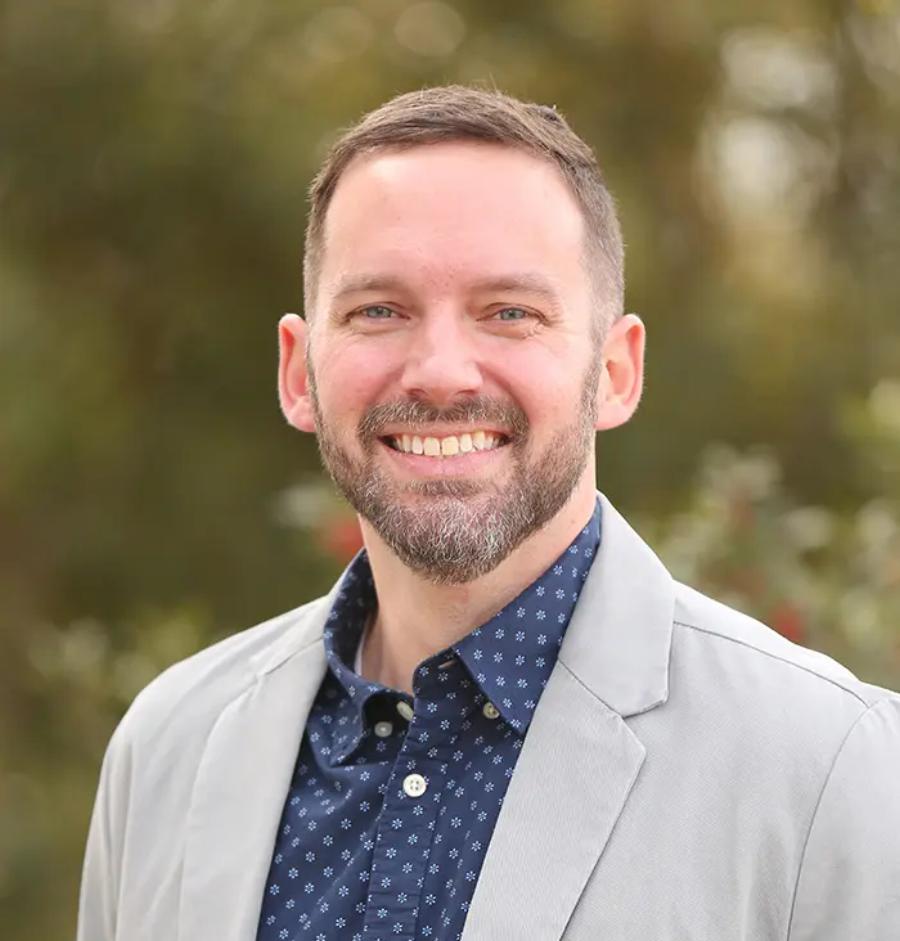
David Sons serves as Pastor of First Baptist Church North Augusta in South Carolina. He graduated from North Greenville University in 2008 with a B.A. in Communications and received his Master of Divinity from Southeastern Baptist Theological Seminary. David came to FBC North Augusta in 2025, and previously served as pastor of Lake Murray Baptist Church. David is the recent past-Chairman of the Executive Committee of the Southern Baptist Convention, and served as chairman of the SBC Committee on Resolutions in 2023. He is married to Allyson, and they have four children. David is the regular host of The Baptist Review podcast.