
Social media posts have been filled with commentary concerning the matter of the role and titles of women in ministry through the local church, but there are two related issues which should not be overlooked, whatever one’s position may be in regard to appropriate roles for women in the church. The first issue relates to the role of the BFM 2000 as it relates to Baptist polity and life; the second issue is raised by the inclusion of the language of “function” in the proposed amendment and the lack of clarity that may produce in the present and future.
The Role of the BFM 2000
Many of the messengers who will be voting on issues related to the BFM 2000 were likely not at the convention which adopted that statement 26 years ago, and thus a little history lesson may be important.
As chairman of the committee that drafted the BFM2000, Adrian Rogers championed the document as a unifying and unapologetically conservative statement of biblical truth. He emphasized that the confession was designed to “guard the treasures of truth” against creeping secularism while still preserving local church autonomy.
An essential update to the confession was the statement that the office of pastor is limited to men as qualified by Scripture. Rogers clarified that this applied specifically to the man who preaches and shepherds the flock, rather than every auxiliary staff title. Rogers ensured that the preamble of the document explicitly stated that the confessions have “no authority over the conscience, and are merely guides,” thereby defending traditional Baptist soul liberty and local church autonomy. In a subsequent Baptist Press interview, Rogers clarified that leadership entities have no authority to mandate a local church’s operations or dictate who they can or cannot hire as their pastor.
Albert Mohler, another member of the committee agreed, stating, “We would never presume to tell another church whom they may call as pastor or tell another person whether or not they may serve as pastor. We’re not trying to force our beliefs on someone else.”
It was made clear that the expectation was that entities controlled by the SBC, and thus receiving funding from the churches of the SBC, would be asked to ensure that their employees would function in accordance with and not contrary to this statement of faith, but that it would never be used to instruct cooperating churches. This was particularly emphasized concerning those who taught at one of our seminaries and those who worked for our mission agencies. We want to be very careful about changing what most Southern Baptists have understood to be the terms of cooperation.
What is now being proposed would be a clear departure from historical Baptist polity in regard to local churches and the denominational structure which affirms local church autonomy and voluntary cooperation. Such a move will subtly but clearly move us from a bottom-up governance to a top-down structure. This sort of polity is more akin to an episcopal model than a congregational model of voluntary cooperation. The potential ramifications of such a change are too many for this short article.
Who Determines Pastoral Function?
Dr. Mohler’s new amendment, which adds “function” to the mix, has created an unusual amount of confusion, division, and name-calling which has occasionally led the questioning of a fellow believer’s commitment to the Scriptures. When such behavior happens at the national level, it will inevitably trickle down to the local church, associational, and state convention level, impacting our Great Commission effectiveness.
Some argue that the issues at stake are not new and are simply a further clarification of a woman serving in the role of pastor/elder/overseer. That issue has been settled by the BFM 2000, and the convention has shown its ability and willingness to deal with this matter.
The original Law Amendment focused on title of other staff members, an issue which the original committee argued would never be used as a test for cooperation. The convention has declined twice to write the narrower “office” standard into the constitution. The new amendment goes beyond title to function, and herein lies much of the confusion.
The first question raised by this addition is what functions are included in this prohibition and the second question is who determines the list of forbidden functions. If any and all pastoral functions are forbidden, the questions will quickly multiply.
An early passage concerning pastoral function is 1 Thessalonians 5:12-13, where terms are used which likely suggest shepherding, teaching, and administration. Acts 6:4 focuses on prayer and the ministry of the word. It is not simply that the pastor prays so that he can preach but that he leads the church to prayer. Ephesians 4:11 elucidates that the pastor must equip the saints for the work of ministry. 1 Timothy 3:2 links “hospitable and able to teach.” To be “hospitable” requires certain functions related to hospitality.
Now the questions begin. Can a woman serve in any capacity where her role involves the equipping of others for the work of ministry? Can she equip other lay members to teach Sunday school or care for preschoolers? Can she serve the church through hospitality ministry or train others to do so? Can a woman visit a hospital, pray with the sick, or lead in the church’s prayer ministry? Is she serves as director of the children’s ministry; can she care for the children and their families?
Since administration is a pastoral function, can a woman serve in any administrative role? Are there various committees she should not be allowed to serve on? Can she chair a committee if men are also members of the committee. Since teaching and leading the church to pray are pastoral function, can a woman lead in prayer in the assembly? Can she lead the prayer ministry? Can she sing a solo? Scripture refers to speaking to one another through psalms and hymns (Eph. 5:19). Assuming the music is theologically sound, would that be inappropriate teaching?
In a seminary church where I served as youth pastor, my wife was asked to lead the youth choir but told she was not to face the congregation nor lead them in congregational singing. This, by the way, is not a new issue. There were hyper-fundamentalists in the seventeenth century who fought against congregational hymn-singing. They had the temerity to tell Benjamin Keach that churches violate 1 Timothy 2:12 when women confess Scripture publicly in song.
The questions continue to mount when we think about the teaching/equipping role. Can a woman co-teach a couples’ class with her husband? What if he cannot be present on a given Sunday? I bring up these illustrations to demonstrate the complexity of what might be considered to be pastoral function unless a comprehensive list is provided to our churches. These questions and suggestions are now occurring regularly on social media and there is little consensus. Nothing is new here. Several years ago, a list of acceptable ministries, including committee assignments, were suggested by a member of Biblical Manhood and Womanhood.
Who is qualified to create such a list that would cover such a diverse convention of churches? I prefer to trust the local pastor who is called by God to shepherd his congregation.
Ramifications Are At The Local Level
If either the Law Amendment or the Mohler amendment adding “function” is passed, the greatest danger to our unity will actually be at the local church level where the ramifications of the vote will be fleshed out. I am concerned that we may someday see churches reporting perceived infractions of sister churches. If we are required to deal with matters of pastoral function at the national level, we will end up devoting more time to disfellowshipping churches than we do celebrating new church starts.
During the conservative resurgence, the danger of the slippery slope was often invoked to warn against the creeping dangers of liberalism. We forget that the slippery slope can also function in the opposite direction. We must guard against embarking on a path that will divide us on forbidden functions for women rather than unifying us around the Great Commission. And while the recent addition of the “specifically” clause may be intended to help us avoid that, the inclusion of function in any way should leave Southern Baptists concerned about the unintended consequences.
While it is a separate issue, I can’t help but wonder what could be the potential impact to our seminaries and mission agencies. Are women faculty who “equip” persons for ministry allowed to hold faculty positions even if they are in the school of music or education? Can they teach a class when men are present? Will single women be able to serve on the mission field?
Much is at stake at this year’s annual meeting, and it requires much prayer.
-----
Editor's Note: As a part of its commitment to fostering conversation within the Southern Baptist Convention, the Baptist Review may publish editorials that espouse viewpoints that are not necessarily shared by the TBR leadership team or other contributors. We welcome submissions for responses and rebuttals to any editorials as we seek to host meaningful conversations about the present and future of our convention.
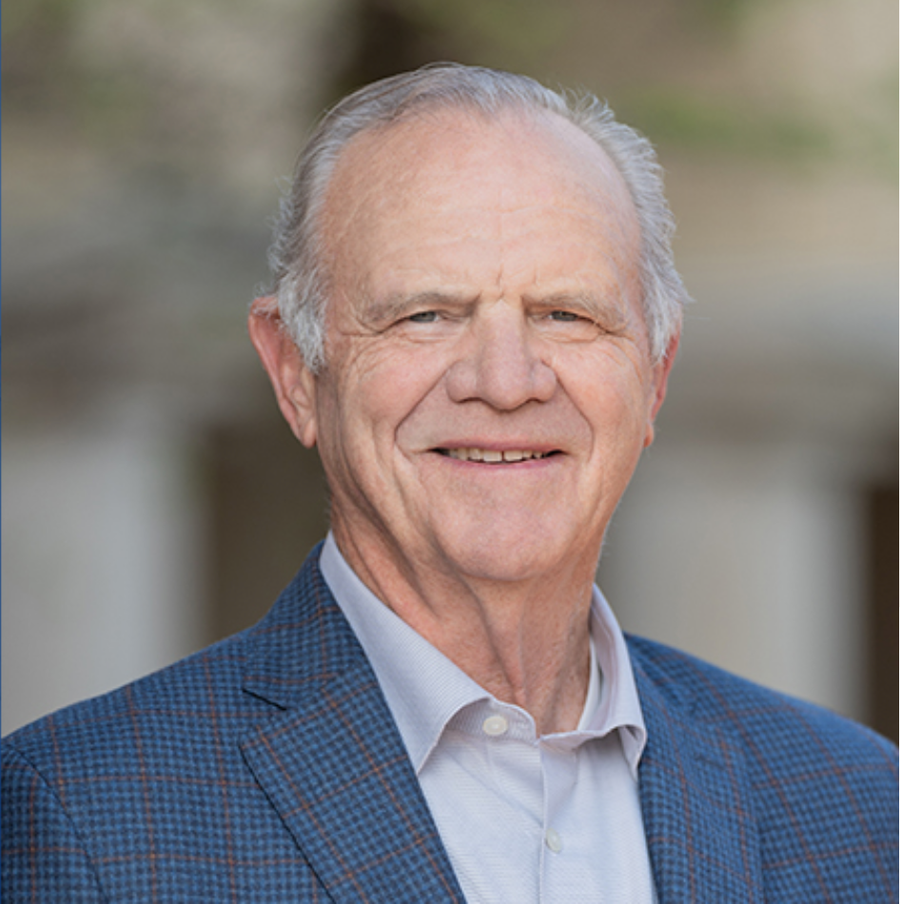
Kenneth S. Hemphill
Dr. Kenneth S. Hemphill holds a Ph.D. from Cambridge University and is the former president of Southwestern Baptist Theological Seminary. He was the national strategist for the Southern Baptist Convention’s Empowering Kingdom Growth emphasis from 2003-2011 and currently serves as Special Assistant to the President and Distinguished Professor of Christian Studies at North Greenville University in Tigerville, South Carolina.