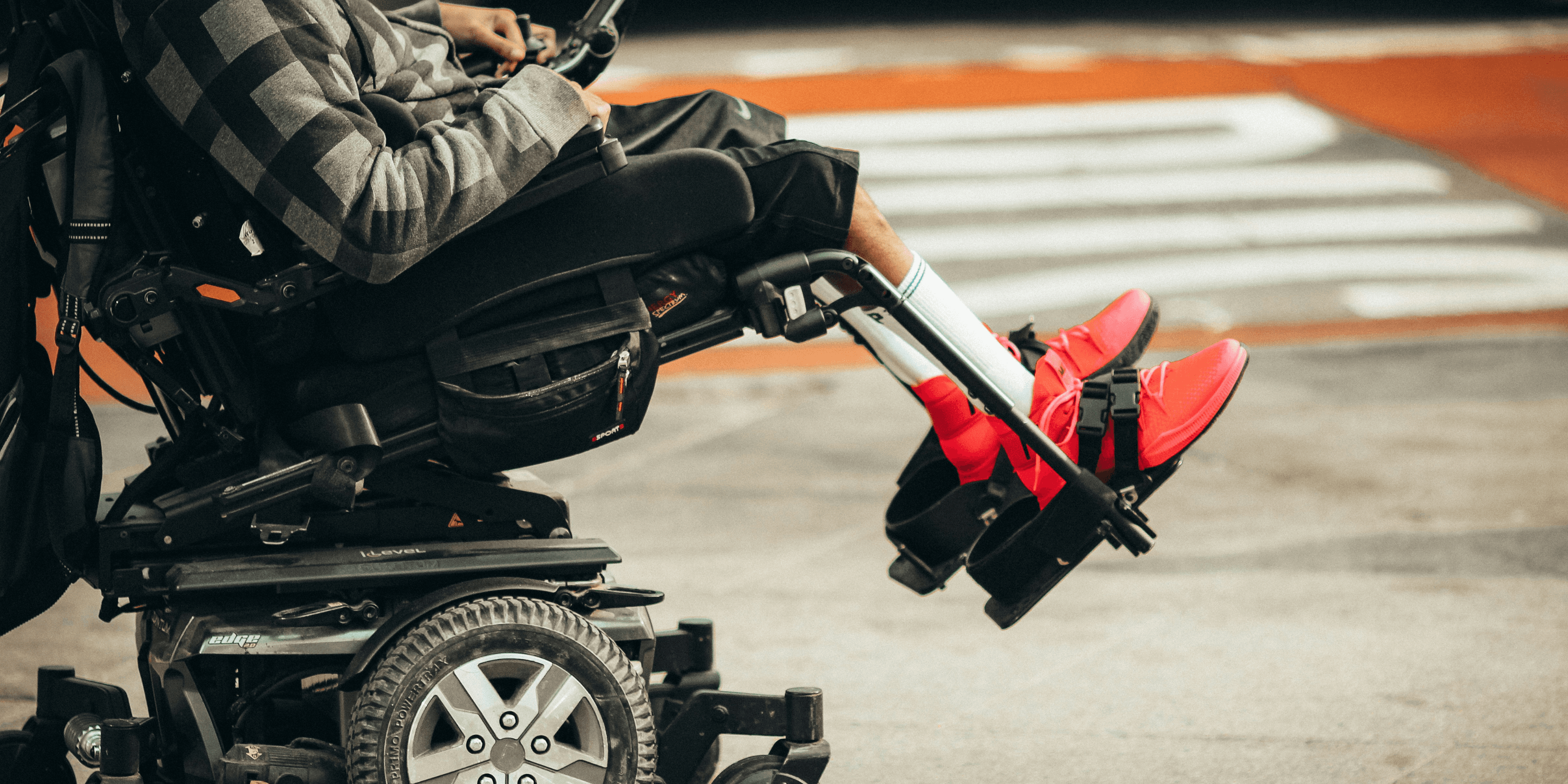
The largest unreached people group in the world today has not been overseas or hidden in remote regions. They have been sitting just outside the reach of our churches for decades.
Multiple studies confirm what many families already know by experience. People with disabilities are significantly less likely to attend church than their peers. Some estimates suggest over two million individuals who should be attending church regularly simply do not.¹ Research from Clemson University also shows that children with disabilities are less likely to attend church, and children with autism are nearly twice as likely to never attend a religious service.²
This is not a marginal issue. It is a missional gap.
At the same time, research has revealed a troubling disconnect within our churches. Studies associated with Lifeway Research indicate that nearly all pastors and churchgoers believe their churches are welcoming to individuals with disabilities.³ However, many families say their lived experience tells a different story. Some research suggests that nearly one in three families affected by disability has left a church because they did not feel included and that more than half of disability parents reported that they had kept their child from participating in a religious activity because support was not provided.⁴
The gap between intention and reality is real, and it matters.
To be clear, this is not because churches do not care. There have been faithful pastors, volunteers, and advocates laboring in this space for years. Many have done so quietly and without recognition. But good intentions and isolated efforts are not enough to address a need of this magnitude. If anything, the data reveals that our current approach is not reaching those we believe we are welcoming.
This concern has not gone unheard.
SBC Response: The Disability Ministry Task Force
For two consecutive years, Benjamin Hankins brought motions to the floor of the Southern Baptist Convention calling attention to disability ministry.⁵ In the first year, the motion was acknowledged but ultimately dismissed by the Executive Committee. The need was affirmed, but no formal action was taken. The following year, multiple messengers once again raised the issue, and this time it was received with greater urgency.⁶
In response, the Southern Baptist Convention Executive Committee voted in September 2025 to form a specially called Disability Ministry Task Force.⁷ This decision marked a significant shift from acknowledgment to action.
The task force was intentionally composed of individuals from across Southern Baptist life. State convention leaders, institutional representatives, pastors, disability advocates, and parents were brought together to study the issue. The goal was not to produce a theoretical document, but to develop recommendations that are biblically faithful, practically helpful, and consistent with Baptist polity.
Those recommendations are now before us.
I had the privilege of serving on this task force, and I will say honestly that I often felt like the least among them. I pastor a small church in a rural county in Florida. When many of us hear the phrase disability ministry, we assume it is something that only large churches with significant resources can do. That assumption has quietly shaped how many of our churches respond.
It is also false.
Disability ministry is not about building a perfect program. It is about removing unnecessary barriers so that people and families can hear the gospel, be discipled, and belong to the body of Christ. Every church, regardless of size, can take meaningful steps in that direction.
For many, this gap is statistical. For others, it is deeply personal.
For me, this is not theoretical. I am the father of two sons with disabilities. Over the last six years, since my middle son was born with Williams Syndrome, our lives have been reshaped in ways I never expected. Williams Syndrome is a genetic condition that brings congenital heart defects, intellectual disability, and a range of other challenges. Within weeks of coming home, my son underwent major open-heart surgery. He spent much of his first year in and out of the hospital fighting for his life.
At the same time, my oldest son began to regress. What we would later understand as Level 3 autism introduced a different kind of challenge, one marked not only by developmental loss, but by social barriers and isolation.
During all of this, I was serving as a pastor and doctoral student at New Orleans Baptist Theological Seminary. I remember pushing a wagon filled with medical equipment just to move from place to place and realizing how many of our churches are simply not built with families like mine in mind.
Social Barriers in Disability Ministry
But the physical barriers were only part of the challenge. The social barriers cut deeper. There was a quiet distance at times. There was uncertainty about where we fit. There were moments when it felt like we were standing on the outside looking in. If God had not sustained our family and placed us in a church community, I know how easy it would have been to drift away altogether.
That is why this matters.
According to findings reflected in the task force report distributed through Baptist Press, only a small percentage of churches have any form of structured disability ministry, while a significant portion of American families are directly affected by disability.
At its core, this is not a programmatic issue. It is a gospel issue.
Jesus consistently moved toward those who were overlooked and marginalized. In Luke 14, He calls His followers to invite those who cannot repay, including the poor, the crippled, the lame, and the blind. If we are to be faithful to His mission, we cannot ignore one of the largest underserved populations in our own communities.
This is where the moment in front of us matters.
Support the Disability Ministry Task Force and Don't Stop There
When the recommendations from the task force are presented for adoption at this years Convention, we need messengers in the room. You can read the recommendations here. We need a clear and unified voice. Passing these recommendations unanimously would send a powerful message, not only within our Convention, but to families like mine who have long wondered if there is a place for them in our churches.
But it cannot stop there. Trustees must take these recommendations seriously and follow through with action. Our churches clearly have the heart for the ministry and so let our institutions equip them to do what God has called us to do. State conventions and associations should begin equipping churches with training and resources. Our institutions should consider how they can lead in accessibility and inclusion.
And at the local church level, we must move beyond assumptions.We must ask questions. We must listen to families. We must take small, intentional steps to create space for people to be known, loved, and discipled.Most importantly, we must move toward people.
The call is not complicated, even if it is costly. People with disabilities are made in the image of God. They are not projects to manage but souls to love. They are not interruptions to ministry. They are part of the mission itself.
This is an opportunity for us as Southern Baptists to align our practice with what we say we believe.
Let us not miss it.
-------
Footnotes
- God Reports: Church ministry to disabled leads to surge in growth
- Clemson University research on disability and church attendance
- Lifeway Research: Churches Believe They Are Welcoming to Those With Disabilities
- Ault, M. J. (2010). Participation of families of children with disabilities in their faith communities: A survey of parents (Order No. 3492795). Available from ProQuest Central; ProQuest Dissertations & Theses Global. (919088298).
- 2025 SBC Annual Report (referencing Hankins motion)
- BCMD.org: BCM/D Church Messengers Make Disability Motions at SBC Meeting
- Baptist Press: Tom Stolle to Chair Special Needs Task Force
Cody Watson
Dr. Cody Watson is pastor of Lake Mystic Baptist Church in Florida and holds a Doctor of Ministry from New Orleans Baptist Theological Seminary. He is the father of three sons, two of whom have disabilities, which shapes his passion for disability ministry and discipleship in the local church.