
New Orleans, 2023. Rick Warren and Albert Mohler are both at floor microphones — Warren pleading for Saddleback to remain in cooperation, Mohler presenting the case for the CC and EC in defense of removal. Linda Barnes Popham is in the queue for Fern Creek. For the first time in SBC history, messengers are about to vote on whether to disfellowship a church. I was there, and I had voted for the bylaw that made this moment possible. When the convention approved the 2019 changes to Bylaw 8, transforming the Credentials Committee (CC) into a year-round standing committee, I supported it. We needed a body that could handle the abuse and racism accusations mounting across the convention. What I did not foresee was that questions of female pastors would become the defining issue the CC faced year after year — and that the bylaw we passed would prove inadequate to handle them well. The inadequacies were already visible in Anaheim in 2022. The CC could not reach a conclusion on Saddleback and withdrew its recommendation. There was no mechanism for the question to come to the floor. There was no standing for Shadd Tibbs—the messenger whose 2021 Nashville motion started the whole process—to speak to his own complaint. Warren could appear at a microphone and read his “Love Letter” to the convention; Tibbs had no such recourse. A year passed before the CC finally acted, the EC ratified, and Saddleback appealed its way to a messenger vote.
The problems we have seen with the CC are clear: Inconsistency, opacity, procedural unfairness, and institutional deadlock. These are not failures of individual members of the committee. I respect and honor the work that the members of the CC do. These problems are simply the predictable result of a bylaw that never adequately equipped the CC or the convention to handle the situations that would be put before them. This amendment solves these problems.
The Four Problems The Current Bylaws Fail to Solve
Problem 1: The Messengers Are Not the Final Word The CC/EC Is
Under the current structure, the CC or EC make the final determination on whether a church is in friendly cooperation — unless a church chooses to appeal, which is the only way messengers ever enter the picture. The proposed amendment changes that. Every cooperation decision would be published in an EC report at least thirty days before the annual meeting, and messengers would vote to approve the report as a whole. Uncontested decisions pass in a single procedural vote; only appealed or deadlocked cases require floor time. “The Executive Committee shall publish, no fewer than thirty (30) days prior to the Convention’s annual meeting, a report of all decisions made regarding the cooperation status of churches since the previous annual meeting.”
With this new language all decisions, positive or negative, get referred to the convention for final approval. If the decisions are not being appealed then they can be presented as a simple report to be approved by the messengers in a procedural vote. It has been pointed out that this kind of approval is more symbolic than real authority, but I was always taught that a symbol points to something greater than itself. It may be more of a symbolic gesture to have messengers vote for a report, but it points to the bigger principle of messenger authority over the convention. This makes every decision over fellowship the messenger’s decision, not just the ones that someone fights with an appeal.
Problem 2: The Debate Structure Was Not Fair to Both Sides
The current Bylaw 8 Section 3.d debate structure assumes one scenario: a church appeals its removal, and one representative from each side speaks. That is the only scenario it contemplates.
At the 2023 annual meeting, Warren made an impassioned plea for messengers to overturn the decision, while Mohler stood at a floor microphone to present the case for sustaining the removal on behalf of the CC and EC. A format that worked in that instance, but was not designed with equal standing in mind. What happens when the reporter of a church is the aggrieved party and wants the messengers to reverse an inclusion decision? Where is their opportunity to give a “resounding plea” to the messengers? The current bylaw has no mechanism for that scenario. The proposed amendment addresses three common scenarios that could occur with the CC. “During consideration of an appeal or an undecided matter reported by the Credentials Committee, debate shall be equal between the parties and structured as follows, subject to the normal rules of debate:
- If the church under consideration is the appealing party: one representative of the church under consideration shall be permitted to speak in its defense, and one representative of the Credentials Committee or Executive Committee shall be permitted to speak in defense of its decision to consider the church not in friendly cooperation.
- If the church or messenger that submitted the matter to the Credentials Committee is the appealing party: one representative of that church or messenger shall be permitted to speak in support of the appeal, and one representative of the Credentials Committee or Executive Committee shall be permitted to speak in defense of its decision to consider the church in friendly cooperation.
- If the matter is presented to the Convention without a recommendation from the Credentials Committee: one representative of the church or messenger that submitted the matter and one representative of the church under consideration shall each be permitted to speak to the question. “
Problem 3: Only the Church Under Consideration Could Appeal Not the Reporter
There has long been a public discussion about how it seems that the credentials committee has been inconsistent in its rulings, and when this inconsistency ends in a decision to include a church in cooperation there is no recourse for the reporter of the church to appeal the decision. The clearest example of this is the contrasting treatment of NewSpring Church and FBC Alexandria. The CC responded to a complaint about NewSpring by finding it to be “in friendly cooperation” despite the church having a female teaching pastor who preaches regularly to the congregation. This was the same CC that removed FBC Alexandria for what amounted to nearly identical practice. NewSpring ultimately chose to voluntarily withdraw from the SBC in April 2025, citing the division its affiliation was causing — but that was the church’s own decision. The reporter who filed the original complaint had no process or standing to appeal the CC’s inclusion decision to the convention floor. This amendment would give that reporting messenger standing to appeal and have a representative speak on their behalf.
“Any decision contained within the report of the Executive Committee regarding the cooperation status of a church may be appealed to the Convention by: (1) the church under consideration; or (2) any church or messenger which formally submitted the matter to the Credentials Committee. Written notice of appeal must be submitted to the chair of the Credentials Committee no fewer than fourteen (14) days prior to the annual meeting”
Problem 4: The Bylaw Has No Mechanism for Deadlock
The current CC language has no procedure for what happens when the committee simply cannot reach a conclusion. A deadlocked committee theoretically means a decision can remain in committee indefinitely. There is no accountability to the convention and no relief for either the church or the reporter. The 2022 Saddleback delay illustrates this: Saddleback is reported and months and months pass with the question hanging in the air. I believe the convention messengers were settled on the issue in Anaheim in 2022, but they were given no mechanism to take action. Instead a year of waiting for the CC to make a decision and an appeal by Saddleback is what it took to bring the question to the floor. With this amendment anytime the CC cannot come to a conclusive decision the matter will not float in obscurity. It will automatically be presented to the convention messengers for a vote. “If the Credentials Committee is unable to reach a conclusion regarding the cooperation status of a church, the committee shall report the matter to the Convention at the next annual meeting. The Credentials Committee chair shall notify the Executive Committee, the Committee on Order of Business, and the President that an undecided matter will be presented to the Convention. The matter shall be placed before the messengers for consideration during the time established for miscellaneous business on the afternoon of the first day of the Convention.”
What the Current Process Looks Like In Practice
Saddleback Church (2021–2023): Tibbs made his Nashville floor motion in June 2021 and was effectively done. The CC took the matter, deliberated for over a year, withdrew its recommendation in Anaheim, and finally acted in February 2023. Saddleback appealed and the messengers voted — 88.5 percent to sustain the removal. The process worked. But it worked only because Saddleback chose to fight. Weeks later, Elevation Church in Charlotte quietly withdrew without a word, and no messenger ever voted on it.
Fern Creek Baptist Church (2023): Popham came to the floor and made her case. The messengers sustained the removal. Same gap as Saddleback: the appeal existed, but only because Fern Creek chose to use it.
The NewSpring Problem (2024–2025): The inverse case. The Credentials Committee found NewSpring to be in friendly cooperation despite employing a female teaching pastor who preaches regularly — a decision described as inconsistent with the removal of FBC Alexandria, which was removed merely for expressing intent to call a female pastor. Under the current bylaw, the reporter of NewSpring had no standing to bring that inconsistent decision to the convention floor. This amendment would have changed that.
What is plain to see is that in certain circumstances when the current bylaws allow, the CC works and works well. The bigger picture is that every single time the messengers have had an opportunity to vote on these issues they have voted in overwhelming unity. The collective “common sense” and wisdom of the messenger body has proven to be a viable authority to deal with these matters.
What the Amendment Does—And Why It's Southern Baptist
1. Messenger Authority is Restored
The convention, not the EC, has the final word on all cooperation decisions. This is not a check on the EC’s competence — it is an affirmation of the convention’s polity. Every cooperating church and every messenger has a stake in who their fellow cooperating churches are. The EC report and en bloc approval mechanism respects efficiency while ensuring that accountability rests where it has always belonged.
2. Fair Debate For All Parties
Three scenarios have been given. All governed by a strict 1-v-1 equality. A church defending itself gets one speaker, the CC/EC defending its exclusion decision gets one speaker. A reporter appealing an inclusion decision gets one speaker; the CC/EC defending its inclusion decision gets one speaker. A deadlocked case gets one speaker from each side directly to the messengers. No one gets two voices to the other side’s one.
3. Expanded standing to appeal
Consistent with Southern Baptist polity. If a church or messenger has standing to file a complaint, they have standing to appeal the result. The amendment reduces the notice period from 30 to 14 days to make this practically workable.
4. No more institutional black holes
A committee that cannot decide must report that fact to the convention. The messengers become the court of last resort, not because the CC failed, but because that is where final authority in Southern Baptist life has always properly resided.
Anticipating Objections
“This will bring too much to the floor to deal with each year, people will grow tired of it.” The vast majority of these decisions will be dealt with with the report approval mechanism. Uncontested decisions are confirmed with a single vote. Only prefiled written appeals or deadlocked CC decisions will be handled on a case by case basis. The current system already puts contested cases on the floor, this amendment just ensures all decisions have at least a ratifying vote. Not to mention that the reason we are at the annual meeting is to do the business of the convention on the only two days of the year that we legally can. These issues are worthy of dedicating time for.
"This empowers bad-faith reporters to disrupt the convention."
The written notice requirement, the 14-day deadline tied to the published EC report, and the requirement that the appellant must have formally submitted the original complaint are all gatekeeping mechanisms. This is not an open microphone; it is a structured appeal with standing requirements. A random messenger who only heard about the EC’s decision cannot submit an appeal simply because it upsets them. The standing requirement is meaningful because filing a formal complaint with the CC requires a church or messenger to go on record, engage with the process, and take institutional responsibility for the accusation. That is a real filter, not a nominal one.
"The Credentials Committee already has enough on its plate."
The CC absolutely has a lot on its plate. It is a committee of volunteers who are spending time outside their normal profession and family time to work on these issues. The amendment doesn't add to the CC's investigative workload; it changes what happens after the CC acts (or fails to act). If anything, the deadlock provision relieves pressure by giving the CC a procedural exit from an impasse.
Our Convention Should Trust Its Messengers
Southern Baptist polity has always held that the messengers of the convention are its highest authority. The Credentials Committee and the Executive Committee serve the convention — they do not constitute it. The cases of the past five years, churches removed, churches that walked away quietly, complaints that went nowhere, decisions that were never ratified by a messenger vote, reveal a bylaw that was designed for a simpler era and has struggled to keep up. This amendment does not diminish the CC. It gives its work the legitimacy that only the convention itself can confer. I voted for the bylaw that created this standing committee in 2019 because I believed — and still believe — that Southern Baptists needed a body capable of addressing these hard questions. But those of us who helped build this system have a responsibility to fix it when it falls short. This amendment does that. A motion this year goes to the EC, comes back to the next annual meeting for a first two-thirds vote, and if approved, returns for a second two-thirds vote the following year. It is a deliberate process, as it should be. The work is worth doing. Southern Baptists have shown, every time they have been given the chance to vote on these questions, that the messenger body is more than capable of handling them. It is time our bylaws trusted them to do so. When the messengers speak, the convention has spoken. That is how Baptist cooperation is supposed to work.
-----
Editor's Note: As a part of its commitment to fostering conversation within the Southern Baptist Convention, the Baptist Review may publish editorials that espouse viewpoints that are not necessarily shared by the TBR leadership team or other contributors. We welcome submissions for responses and rebuttals to any editorials as we seek to host meaningful conversations about the present and future of our convention.
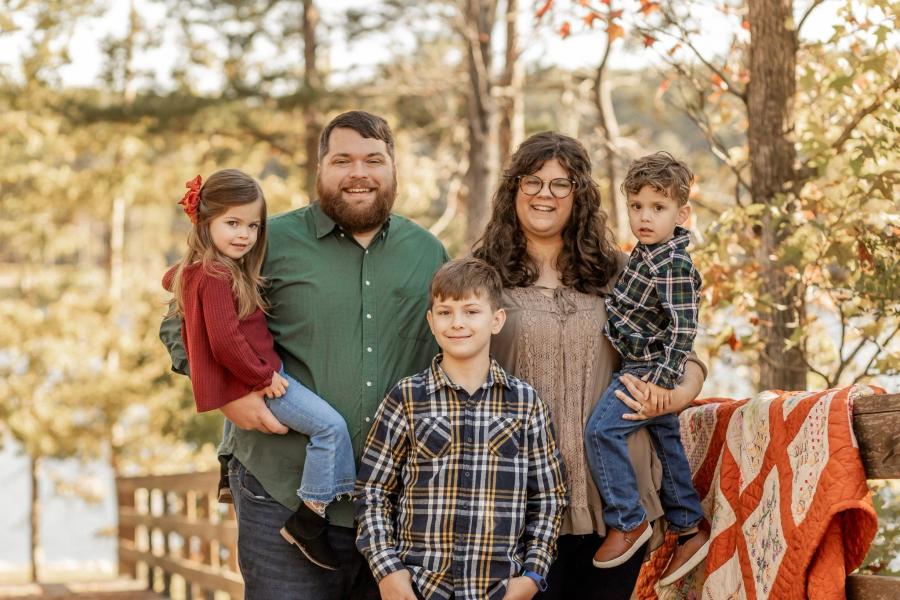
Jonathan Greer
Jonathan Greer is pastor of Franklin Creek Baptist Church in Moss Point, MS. He is married to Hannah, and together they have three kids. Jonathan is a graduate of Blue Mountain College. He has served on the SBC Registration Committee, Tellers Committee and Committee on Committees. He is serving his second term as moderator of the Jackson County Baptist Association and leads the Church Development Team.